





Chennai, Feb 27 (UNI) India boosted their chances of reaching the semi-finals of the ICC Men’s T20 World Cup 2026 with a commanding 72-run win over Zimbabwe in their second Super 8 fixture at the MA Chidambaram Stadium in Chennai on Thursday.
The defending champions rode a collective batting effort from the top six, including half centuries from Abhishek Sharma and Hardik Pandya, and notable contributions from Ishan Kishan, Tilak Varma and Suryakumar Yadav before Arshdeep Singh starred with three wickets to take the gas out of Zimbabwe’s chase despite a fighting unbeaten 97 from opener Brian Bennett.
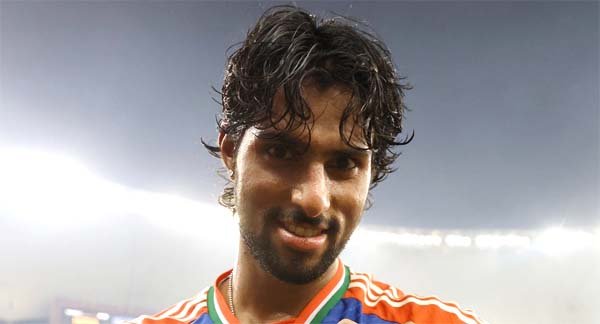
Tilak, who was given a new role at No.6 after struggling for fluency at one-drop in the previous five innings, analysed his approach during his explosive 16-ball unbeaten 44, after the match.
“I wasn’t overthinking my batting. I was just focused on following my basics. I sat in my room and didn’t speak to anyone apart from my family and one of my friends. I watched my old videos because I knew it was just a matter of one innings. I knew I would get that confidence and my batting form back. I told my family the same thing, that if I’m able to get that one good innings, I would go on to win games for the team from then on,” Tilak said on JioHotstar.
Speaking about the fluidity in India’s batting order and the mindset in the dressing room, Tilak added, “Before the game, Hardik bhai, Surya bhai and all the batters had a chat that we would play according to what the team needs and the match situation. There was no discussion about positions in the batting order.”
“We are all flexible and can bat wherever the team requires. Everyone has the freedom to express themselves and be fearless in taking the best option while in the middle. The idea was to keep a smile on your face and enjoy the game. At most, you might get out, but the fear in the bowlers’ eyes should be visible, that we are ready to hit every ball. That was the only mindset we played with.”
Former all-rounder Irfan Pathan analysed India’s decision to revert to a top three of Abhishek Sharma, Sanju Samson and Ishan Kishan, highlighting the tactical reasoning behind the move.
“I am interested to see how this left-right combination pans out for Team India. Yes, I would not have preferred Ishan Kishan to bat at number three, but you understand what the Indian team was trying to do. I was actually a little surprised that Sikandar Raza didn’t come on to bowl early.”
“I think he was waiting for the Powerplay to finish, but he should have come in as soon as Ishan Kishan came in to bat. That would have been the right way to go about it. This is what the Indian team management wanted to do, to avoid having three left-handers coming in one after another, so it worked out for them. What I liked about Abhishek Sharma’s batting was the way he played in the V (mid-on to mid-off section of the field). 68 per cent of his runs came in front, which was a welcome change in approach, especially from a player who likes to play square. The pitch also helped. There was some poor bowling from Zimbabwe as well,” Pathan added.
On Arshdeep Singh’s incisive spell, Pathan underlined the seamer’s ability to set up batters and adapt to conditions. “The first ball Arshdeep bowled was slightly short of a length. Chennai’s pitch doesn’t have much grass and it doesn’t offer a lot of swing, so what he did was show the batsman that he could bowl short of a length. After that, he kept hitting the stumps. It was all about the setup. He sets up batters really well,” said the former India left-armer.
“We have spoken about Jasprit Bumrah’s ability to read the pitch brilliantly, and Arshdeep is not far behind. He came around the wicket with the old ball and made sure he targeted the stumps regularly. He kept bowling Yorkers because there will be times, like against the West Indies, when he might have to bowl defensively. I was really pleased with what I saw from Arshdeep in this game,” he added.