



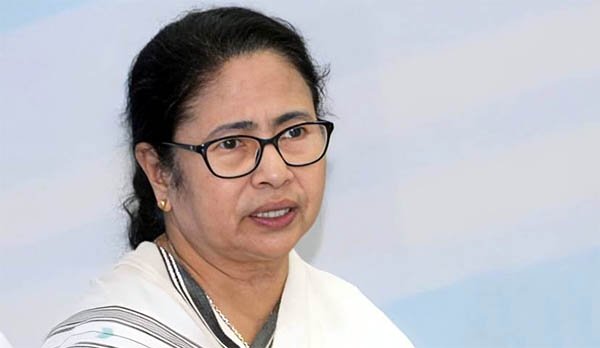
New Delhi, Feb 4 (UNI) In a dramatic courtroom moment on Wednesday, West Bengal Chief Minister Mamata Banerjee personally addressed the Supreme Court, alleging that her State was being “selectively targeted” through the Special Intensive Revision (SIR) of electoral rolls ahead of elections.
The Supreme Court subsequently issued notice to the Election Commission of India (ECI) on her writ petition challenging the SIR process in West Bengal and asked the poll panel to reply by Monday.
A Bench led by Chief Justice of India Surya Kant took up Banerjee’s plea against the ECI, which alleges that the ongoing SIR exercise would result in “large-scale disenfranchisement” due to what she termed as an opaque, hurried, unconstitutional, and illegal process.
As the matter was called out, Senior Advocate Gopal Sankaranarayanan mentioned the urgency of the petition, noting that the issue involved fresh matters listed as Items 36 and 37.
With the Court indicating it would shortly hear the case, Chief Minister Mamata Banerjee walked up to the podium and sought to address the Bench directly.
“This SIR process is only for deletion,” Banerjee submitted, asserting that genuine voters were being removed due to minor mismatches arising from social realities such as women changing surnames after marriage or poor migrants shifting residences.
She told the Court that voters’ names were deleted on grounds of “logical discrepancy”, even where the mismatch was merely in titles or spelling variations. “There are daughters who shifted to their in-laws’ houses. Their names are deleted. Poor people move for work. Why should that be a ground for exclusion?” she asked.
In a strongly worded submission, Banerjee questioned the timing and selectivity of the SIR exercise.
“Four States are going to elections. Why after 24 years? Why this hurry to finish everything in three months? Why only Bengal? Why not Assam?” she asked, alleging political targeting.
She further told the Court that the process was undertaken during the harvesting season and peak migration period, claiming that over 100 people had died and several Booth Level Officers (BLOs) had been hospitalised due to work pressure.
The CJI acknowledged the concerns raised, particularly issues relating to local dialects, transliteration from Bengali to English, and even the role of AI-assisted processes in creating discrepancies.
“By virtue of this kind of issue, genuine electors must not be excluded,” the CJI observed, indicating that the Court would explore solutions to ensure bona fide voters remain on the rolls.
The Bench also noted translation difficulties and suggested that the State government could assist by providing teams fluent in Bengali and local dialects to help the ECI identify and correct errors.
Senior Advocate Shyam Divan, appearing in the matter, placed detailed figures before the Court, stating that nearly 1.36 crore voters about 20 per cent of the electorate had been placed in the Logical Discrepancy (LD) category, with around 32 lakh voters classified as “unmapped”.
Divan argued that a vast majority of these cases involved minor spelling differences such as “Datta”, “Dutta”, “Ganguly”, or “Roy”, arising from translation of old Bengali electoral rolls into English. He contended that notices issued to voters merely stated “discrepancy in mapping” without specifying reasons, depriving voters of an effective opportunity to respond.
“Family registers, Aadhaar cards, caste certificates, none are being accepted by themselves, despite court orders,” Divan submitted, seeking directions to withdraw notices issued solely on name mismatches and to mandate disclosure of reasons for each LD classification.
Senior Advocate DS Naidu, appearing for the Election Commission, stated that the pleadings had not yet been served and sought a week to obtain instructions.
The CJI firmly declined, observing that the electoral process was operating under strict timelines.
“We have already extended the time by ten days. Only four days are left for hearings. We cannot grant the luxury of one week,” the Bench said.
In a rare personal intervention, Banerjee told the Court, “I am here not for my party. I wrote letters to the Election Commission. When justice is crying behind closed doors, and we are not getting justice anywhere, we came here.”
The Bench noted that the State of West Bengal had also independently filed a petition and that senior counsel, including Kapil Sibal, had earlier explained procedural difficulties and apprehensions of exclusion of bona fide residents.
After hearing the submissions, the Supreme Court issued notice to the Election Commission of India on Mamata Banerjee’s petition, signalling close judicial scrutiny of the SIR process in West Bengal.
The matter will be taken up for further hearing in view of the limited time left before finalisation of the electoral rolls.