



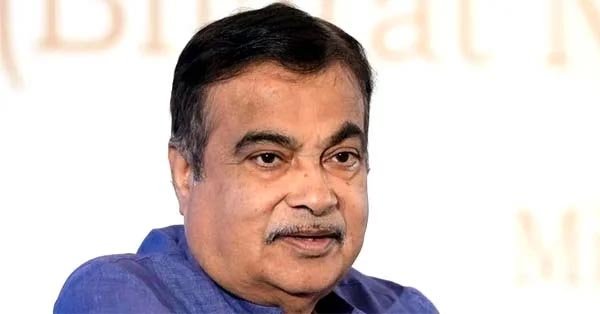
New Delhi, Dec 18 (UNI) Releasing a political memoir on former Prime Minister Atal Bihari Vajpayee in Delhi on Wednesday, Minister Nitin Gadkari recalled Vajpayee as a strong practitioner of “politics of conviction over politics of convenience”. The memoir ‘Atal Sansmaran’ is penned by Ashok Tandon, who served as media relations incharge in the PMO under Vajpayee.
The release of the book coincides with the 100th birth anniversary month of former prime minister.
Gadkari underlined the relevance of the book in today’s political scenario and recalled his personal interactions with the former Prime Minister. He said that a very few leaders matched Vajpayee’s intellectual depth or his engagement with literature, art, and culture in the political history of independent India.
Gadkari noted that Vajpayee viewed development as more than physical infrastructure, insisting that it must also encompass human development, patience, and social sensitivity.
Recounting his years of working with Vajpayee, he said the former Prime Minister spoke sparingly but acted decisively. “He believed that if someone came to meet you, you must never refuse them time,” Gadkari said, describing this as a life lesson he learnt as a young party worker and continues to follow as a cabinet minister.
The Minister added that Vajpayee rejected power-centric politics, advocating instead a politics rooted in ideology, conviction and social responsibility. While Vajpayee was not scared of disputes, Gadkari said that he believed it should not be at the cost of ideals.
Vajpayee, he said, believed governance was about institutions and ideas rather than individuals. “Who occupies the Prime Minister’s chair matters less than the inheritance of ideas,” he said, recalling Vajpayee’s belief system.
Gadkari also highlighted Vajpayee’s ability to disagree without bitterness and his insistence on dignity in public life, even amid sharp political differences. “He believed protest was important, but discussion was indispensable,” he said, adding that differences are natural in a democracy, but hatred, personal animosity, should never exist.
Present at the release, India TV Editor-in-Chief Rajat Sharma said that one of the most enduring qualities of Vajpayee was he knew when to remain silent. Drawing from poetry and personal exchanges, he described Vajpayee as a leader for whom disagreement never translated into bitterness and for whom dialogue always took precedence over confrontation.
Sharma also reflected on Vajpayee’s moral authority and the enduring relevance of his politics. Invoking idioms closely associated with Vajpayee, he said the former Prime Minister often questioned whether power made leaders better human beings.
“Atal ji reminded us that politics must refine people, not corrode them,” Sharma said, likening power to a ‘kajal ki kothari’, a place where stains can appear without warning.
Emphasising the importance of preserving political memory, Sharma said such recollections were vital to guide future generations and ensure that history is not forgotten.