





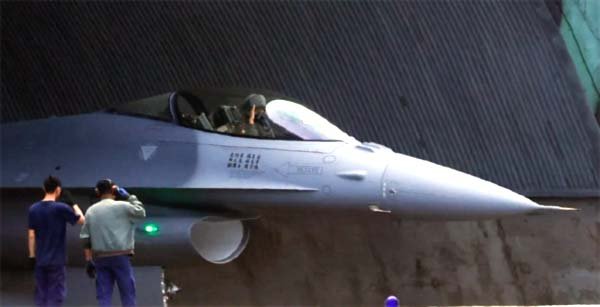
Washington/Taipei/Beijing, Nov 14 (UNI) The US has approved a $330 million sale of fighter jet and transport aircraft parts to Taiwan — the first such package since President Donald Trump took office in January, drawing Beijing’s ire.
Taiwan’s presidential office welcomed the announcement, describing it as further evidence of sustained US support.
“The deepening of the Taiwan-US security partnership is an important cornerstone of peace and stability in the Indo-Pacific region,” presidential office spokesperson Karen Kuo said.
The move comes at a particularly sensitive time amid heightened regional tensions, as China has been amping up its military presence in the island country’s maritime zone through its constant incursions, while the US has been maintaining its role as Taiwan’s main weapons supplier, and military supporter under the Taiwan Relations Act, reports Taipei Times.
Announcing the presidential greenlight, the Pentagon said the proposed sale would enhance Taiwan’s defensive readiness by supporting the upkeep of its F-16 fighter jets, C-130 transport aircraft and other platforms, which “will improve the recipient’s capability to meet current and future threats by maintaining the operational readiness of the recipient’s fleet.”
Although Washington formally recognises Beijing’s political position, it maintains unofficial ties with Taipei and is legally required to help the island maintain sufficient self-defence capabilities.
Taiwan’s Ministry of National Defence also thanked Washington, saying the package — expected to take effect within one month — would boost the air force’s fighter readiness, reinforce air defences, and strengthen the island’s ability to counter China’s expanding “grey-zone” pressure.
The ministry noted that the deal aligns with US commitments under the Taiwan Relations Act and the Six Assurances.
Beijing, in line with its predictable state rhetoric, expressed strong condemnation, reiterating its long-held claim that Taiwan is an inalienable part of China, something which Taipei has completely rejected.
“The Taiwan question is the core of China’s core interests and the first red line that must not be crossed in China-US relations,” Foreign Ministry spokesperson Lin Jian told reporters in Beijing.
China’s military has dramatically increased its operations around Taiwan in recent years, flying larger numbers of warplanes and sailing naval vessels near the island, as part of its pressure and intimidation tactics by projection of its military might.
The approval of the arms package comes shortly after Trump and Chinese President Xi Jinping met in South Korea late last month, where economic negotiations took centre stage.
The meeting had prompted concern in Taipei that Taiwan’s security interests could become entangled in the broader US-China bargaining.