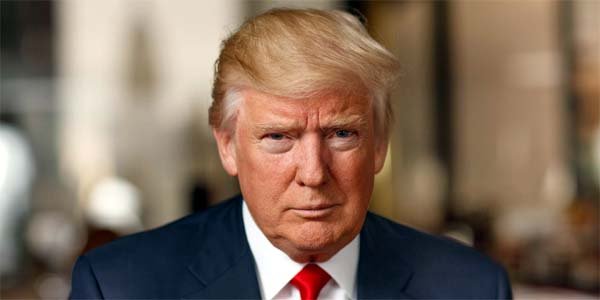





Washington, (UNI) Ten days after the joint US-Israeli strikes, launched on Iran, President Donald Trump’s endgame remains unclear and frequently shifting.
Across interviews, press conferences and social media posts, Trump has alternated between predicting the war’s rapid conclusion and warning of further escalation, while also suggesting he could influence Iran’s future leadership — even as his administration insists regime change is not the objective.
Officials say the mission’s aims are straightforward: dismantling Iran’s nuclear capabilities, curbing its support for militant groups and weakening its naval power. But Trump’s own messaging has often appeared more mixed, making any definitive statement hard to reach.
White House spokesperson Olivia Wales insisted the mission — known as “Operation Epic Fury” -is not merely meeting, but rather exceeding its objectives and said the US would continue acting to eliminate what it calls the security threat posed by Iran.
Yet Trump’s own statements have at times diverged from that message.
On the timeline, he initially suggested the military campaign would last about four weeks, with press secretary Karoline Leavitt saying the objectives could take four to six weeks. But Trump later said the conflict could end in “two or three days” — or continue indefinitely if necessary.
On Monday he told CBS News the war was “very complete, pretty much” with little left to achieve militarily. The same day, the Pentagon posted online that the operation was “just the beginning”.
The president’s remarks about the endgame have also shifted. At one point, he said the campaign could already be considered a “tremendous success”, but added that the United States would continue pushing towards “ultimate victory”. Last week, he said he would accept no outcome short of Iran’s “unconditional surrender”.
Despite that stance, Trump has also said it remains “possible” he could speak directly with Iranian leaders.
Energy markets have been another focus. Trump said oil prices had risen less than expected following the attacks and predicted they would soon fall. At the same time, the administration has taken steps to calm markets, including easing sanctions on Russian oil.
He has also floated the idea of seizing the Strait of Hormuz and warned Iran it would be hit “twenty times harder” if the crucial shipping route were closed.
Perhaps the most striking divergence concerns Iran’s political future. While Defence Secretary Pete Hegseth has repeatedly said regime change is not the aim of the operation, Trump has spoken openly about Iran’s leadership.
In one interview, he suggested he might help choose the country’s next leader and described Mojtaba Khamenei as “unacceptable”, though he later declined to say whether the current leadership would be targeted.
Soon after announcing the strikes, Trump said his ultimate goal was “freedom” for the Iranian people and urged them to “take over” their government once the fighting ended.
More recently, he said he would like to help Iranians — “if they can behave” — but added that the current political system only allows failure.
Trump gives off mixed signals amid US-Israel war on Iran; endgame unknown