





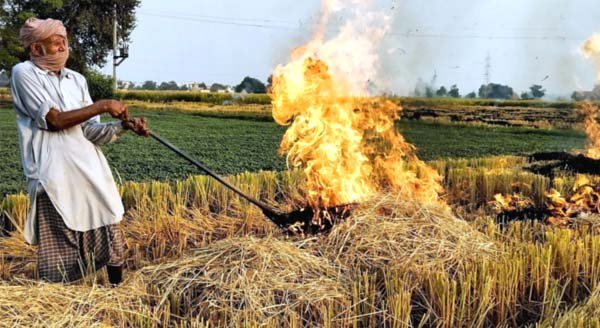
New Delhi, Nov 4 (UNI) The Commission for Air Quality Management (CAQM) today noted a huge drop in paddy burning cases from Punjab and Haryana in the current harvesting season.
Reporting the declining trends of the fires compared to the previous year, the agency highlighted that between September 15 and November 3 this year, Punjab recorded 2,518 fire incidents, nearly a 40 per cent decline from the previous year’s count of 4,132 in the same period.
Haryana witnessed a much higher drop, from 857 cases in 2024, the paddy burning cases this year stood at 145.
The agency pointed out to intensified monitoring of the paddy stubble burning at the field level. The Commission has opened a cell in Chandigarh and has also deployed 31 flying squads in Punjab and Haryana.
Through 2,161 field inspections from Punjab and 121 such checking drives in Haryana, the Commission has so far imposed fines to the tune of Rs 52.75 lakh in Punjab and Rs 3 lakh in Haryana as Environmental Compensation (EC).
The First Information Reports have also been filed against the farmers under Section 223 of Bharatiya Nyaya Sanhita, 2023, for violating the ban on burning agricultural waste. In Punjab, the number of FIRs filed until Monday was 946; for Haryana, the number is 42.
The Commission also outlined the measures taken by agencies across NCR to abate air pollution in the national Capital, with the enforcement of Stage II Graded Response Action Plan (GRAP) in the city invoked on a Diwali eve, October 19.
To curb the pollution levels in Delhi by vehicular transport, one of the leading contributors to the city’s PM 2.5 load, the commission has restricted the entry of all non-Delhi-registered BS-III and below standard commercial goods vehicles to enter the city, starting November 1, in accordance with the Supreme Court directions.
On Tuesday, Delhi witnessed a slight improvement in its air quality. The 24-hour average AQI for Delhi stood at 291, improving slightly from Monday’s average of 309, falling from the ‘very poor’ to ‘poor’ category.