


By Special Correspondent
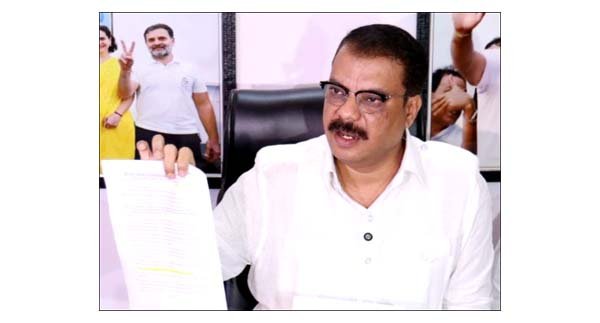
Bhopal: Leader of Opposition Umang Singhar has raised strong objections to the Election Commission of India’s Special Intensive Revision (SIR) of electoral rolls, describing it as a “Selective Intensive Removal” exercise that threatens the roots of democracy.
At a press conference, Singhar highlighted several inconsistencies and questioned the transparency of the process. The Election Commission has announced the second phase of SIR to be conducted across 12 states and Union Territories between 4 November 2025 and 7 February 2026, claiming that enumeration of 510 million voters will be completed within just 30 days.
Singhar questioned the feasibility of such a massive exercise in such a short span, warning that millions of legitimate voters could be excluded. He also criticised the opaque selection of 12 states, asking why others were left out and demanding the public disclosure of selection criteria.
Citing Assam’s exclusion under the pretext of NRC, he alleged selective bias and questioned why the Commission failed to review shortcomings of the earlier Special Summary Revision (SSR) before introducing SIR. Referring to Bihar’s experience, he noted that over 47 lakh voter names were removed, with the Supreme Court forced to intervene due to inaccuracies.
Turning to Madhya Pradesh, Singhar warned that the state’s 22% tribal population could face disproportionate exclusion due to limited access to documents and digital systems. The rejection of over three lakh Forest Rights claims earlier this year, he said, could further disenfranchise tribal voters. Migrant workers and minority groups too risk deletion, he added.
Singhar also reminded that his earlier allegations of “voter theft” in Madhya Pradesh—where over 16 lakh new names were added in two months—remain unanswered. He concluded that the SIR, in its present form, represents not voter roll cleansing but a systematic dilution of electoral rights and democratic representation.