




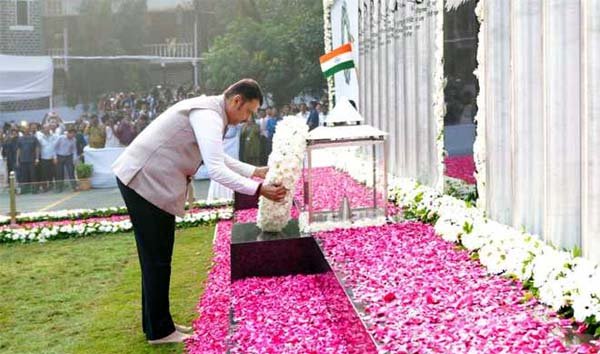
New Delhi, Nov 26 (UNI) Seventeen years after the 26/11 attacks, one of the deadliest terrorist attack in India’s history, Mumbai today remembers the horrific night when 10 Pakistan-backed Lashkar-e-Taiba terrorists launched a coordinated wave of terror on November 26, 2008.
The attack left 166 people dead and 300 wounded in a four-day siege. Today, the nation pauses to remember and reaffirm its commitment to ensuring that such horror is never repeated.
The 60-hour siege, which began on November 26, 2008, targeted luxury hotels, Mumbai’s main railway station, and a Jewish cultural center. India’s bustling financial and entertainment capital was thrust into the grips of one of the most shocking terror attacks the world had ever seen. Ten heavily armed terrorists arrived by sea in the evening, split into groups, hijacked vehicles, and launched attacks on strategic targets, including two luxury hotels, the Taj Mahal Palace and Oberoi hotels, Chhatrapati Shivaji Maharaj Terminus, the Jewish centre at Nariman House, Cama Hospital, Metro Junction and Leopold Café .
Nine of the terrorists were killed, while the lone surviving attacker, Ajmal Kasab, was captured alive and later sentenced to death in 2010. He was executed in 2012 at a high-security prison in Pune.
The attack remains one of the most brutal manifestations of cross-border terrorism India has faced, particularly pertinent today amid heightened security concerns following the recent November 10 blast in Delhi.
The international dimensions of the plot have long been established. US citizen David Coleman Headley, who pleaded guilty in 2010 to 12 federal terror charges and later cooperated with investigators, admitted to attending five Lashkar-e-Taiba training camps between 2002 and 2005 and conducting extensive reconnaissance in Mumbai ahead of the attacks.
His surveillance missions laid the groundwork for the assault that killed more than 160 people, including six Americans.
Headley was sentenced to 35 years in prison for a dozen federal terrorism crimes relating to his role in planning the November 2008 terrorist attacks in Mumbai, India.
In late 2005, Headley was tasked with surveillance in India by Lashkar-e-Taiba. To conceal his identity, he changed his name from Daood Gilani to David Headley in 2006, portraying himself as an American. That year, he and two Lashkar members discussed using an immigration office in Mumbai as a cover for his activities.
Headley made five trips to Mumbai between 2006 and 2008, gathering video footage of potential attack targets, including those hit in the November 2008 attacks. Before each trip, Lashkar provided specific locations for surveillance, and after each visit, Headley would meet with Lashkar members in Pakistan to report and hand over the footage. In April 2008, Headley, along with his co-conspirators, discussed potential landing sites for attackers arriving by sea. He used a GPS device to map out key sites around the Mumbai harbor.
In pleading guilty and later testifying for the government at the trial of a co-defendant, Headley admitted that he attended training camps in Pakistan operated by Lashkar e Tayyiba, a terrorist organization operating in that country, on five separate occasions between 2002 and 2005. In late 2005, Headley received instructions from three members of Lashkar to travel to India to conduct surveillance, which he did five times leading up to the Mumbai attacks in 2008 that killed more than 160 people, including six Americans, and wounded hundreds more.
Headley was convicted in conspiracy to bomb public places in India; to murder and maim persons, six counts of aiding and abetting the murder of U.S. citizens in India, provide material support to terrorism including the Lashkar group.
According to Headley’s guilty plea and testimony, he attended the training camps operated by Lashkar.
In the wake of the tragedy, India undertook significant reforms in its security policy to prevent such attacks in the future. Key changes were introduced in areas such as intelligence coordination, coastal surveillance, rapid response mechanisms, and communication systems. The establishment of National Security Guard (NSG) hubs in major metropolitan centers and the strengthening of maritime security were among the most critical measures aimed at improving preparedness and response to potential threats.