






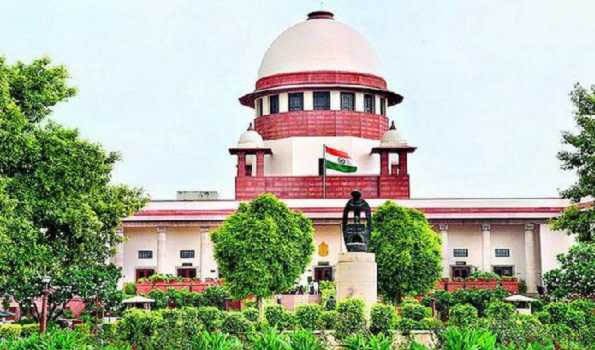
New Delhi, Feb 3 (UNI) The Supreme Court on Tuesday examined the plea by Shaadi.com founder and Managing Director Anupam Mittal seeking quashing of criminal proceedings arising out of allegations that a user of the matrimonial platform cheated a woman after creating a profile with unverified credentials.
A Bench comprising Justice Prashant Kumar Mishra and Justice N.V. Anjaria noted that the proceedings against Mittal had earlier been stayed and took up the matter for final consideration.
Appearing on behalf of Mittal, Senior Advocate Atmaram Nadkarni submitted that Shaadi.com functions solely as a matchmaking intermediary, facilitating initial contact between prospective individuals and nothing beyond that.
He argued that Mittal had been wrongly arrayed as an accused despite the company’s continued cooperation with the investigating agency. The senior counsel pointed out that although one employee had been arrested in the matter and later released on bail, there was no direct role attributed to Mittal.
Nadkarni further contended that the alleged offence was one of cheating and that after an initial interaction on the platform, the complainant and the accused communicated independently through WhatsApp.
He also denied allegations of non-compliance with Section 79 of the Information Technology Act, maintaining that the company had fulfilled its statutory obligations.
The Bench, however, observed that the prosecution’s case was that the platform had facilitated the alleged fraud. It also questioned why relief was being sought from the Supreme Court when a petition seeking quashing was already pending before the High Court.
The Court noted that the High Court’s impugned order did not reflect any adjudication on the merits of the quashing plea and merely recorded limited submissions. Taking note of this, the Bench held that the matter required reconsideration by the High Court.
Accordingly, the Supreme Court set aside the earlier order and remitted the case to the High Court for a fresh decision on the merits.
The criminal proceedings were restored to their original file. The Court clarified that it had expressed no opinion on the merits of the allegations.
In the meantime, the Bench granted interim protection to Mittal, directing that no coercive action shall be taken against him for a period of eight weeks, during which he may seek appropriate interim relief before the High Court.