



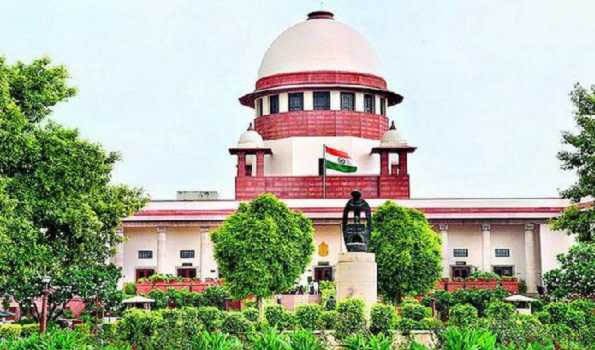
New Delhi, Sep 11, (UNI) After a detailed ten-day hearing, the Supreme Court today reserved its judgment on a Presidential reference under Article 143 concerning timelines for granting assent to Bills by the President and the Governor under Articles 200 and 201 of the Constitution.
A five-judge Constitution Bench comprising Chief Justice of India B.R. Gavai, Justice Surya Kant, Justice Vikram Nath, Justice P.S. Narasimha, and Justice A.S. Chandurkar heard the matter.
The reference was made by the President in May, following a two-judge Bench ruling in the Tamil Nadu Governor case, which had laid down timelines for action on Bills.
During the hearing, the Bench clarified that it would not sit in appeal over the earlier judgment but would answer only the constitutional questions raised in the reference.
Several States, including Tamil Nadu, Kerala, West Bengal, and Punjab, questioned the maintainability of the reference, contending that the issues had already been addressed in the Tamil Nadu Governor case.
The Bench asked whether Governors could indefinitely withhold Bills without returning them to the legislature, observing that such a scenario could leave elected governments at the mercy of Governors. It also queried whether isolated instances of delay justified imposing uniform timelines on both the President and Governors.
Attorney General R. Venkataramani opposed fixing timelines for powers under Articles 200 and 201, cautioning against judicial overreach and interference into the discretionary powers of Governors.
Solicitor General Tushar Mehta, representing the union Government, echoed this view, arguing that issuing directions to Constitutional functionaries could violate the separation of powers doctrine.
On the other hand, senior advocates appearing for several states, including Kapil Sibal for West Bengal, Dr. A.M. Singhvi for Tamil Nadu, K.K. Venugopal for Kerala, Gopal Subramanium for Karnataka, and Arvind P. Datar for Punjab, pressed for judicially mandated timelines to prevent Governors from obstructing legislative processes.
Senior Advocates Harish Salve and Mahesh Jethmalani, representing Maharashtra and Chhattisgarh, respectively, aligned with the Union’s stance against judicial overreach.
The Bench examined precedents and principles of legislative accountability, separation of powers, and constitutional morality. It referred to earlier hearings where it questioned the possibility of indefinite withholding of Bills, the impact on elected governments, and the feasibility of blanket timelines.
The judgment is awaited, with the Bench likely to address whether constitutional high functionaries can be subjected to time-bound obligations and how accountability can be ensured without compromising constitutional autonomy.