





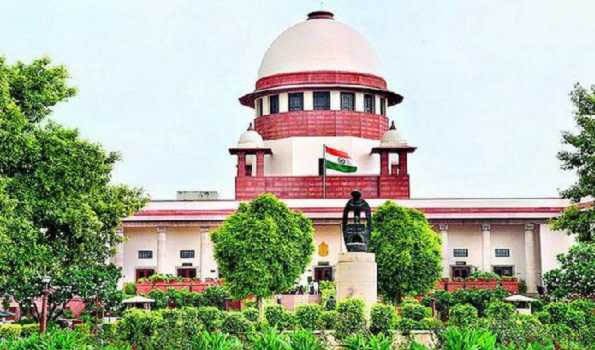
New Delhi, Oct 14 (UNI) The Supreme Court today expressed deep disappointment over the lack of cooperation from premier educational institutions, including IITs and IIMs, in responding to a court-mandated nationwide survey aimed at addressing the alarming rise in student suicides on campus.
A bench comprising Justice J.B. Pardiwala and Justice R. Mahadevan noted that despite repeated reminders, nearly 57,000 educational institutions, including several IITs, IIMs, AIIMSs, and NITs, have not responded to the survey being conducted by a court-appointed National Task Force.
The survey was ordered by the Court to identify the causes and suggest remedies for the growing number of suicides in educational institutions.
Senior advocate Aparna Bhat, assisting the Court as amicus curiae, informed that out of the total, 17 IITs, 15 IIMs, 16 AIIMSs, and 24 NITs have failed to respond despite four reminders. Only about 3,500 institutions have so far submitted their responses.
The amicus also placed before the bench data showing that 98 students have died by suicide in premier institutions since 2018 including 39 from IITs, 25 from NITs, 25 from central universities, and four from IIMs.
“This entire exercise is being undertaken in the interest of students, and it is expected that all institutes render full cooperation to enable the National Task Force to finalise its report,” the bench observed.
Expressing serious concern, the Court said, “We request the union of India to once again take up this issue very seriously and impress upon all these institutes to cooperate.”
Senior advocate Harish Salve, who was present in court, volunteered to take up the issue with all IITs across the country to ensure their cooperation, a gesture appreciated by the bench.
Granting one final opportunity to the defaulting institutions, the Court warned that “failing which, we may have to pass orders which the institutions may not like and which may bring a bad name to them.”
The Supreme Court had earlier constituted a multi-disciplinary task force headed by its former judge Justice Ravindra Bhat to analyse and recommend measures to prevent suicides on campuses.
The panel includes experts from psychiatry, clinical psychology, and education, tasked with identifying factors such as ragging, caste or gender discrimination, sexual harassment, academic pressure, financial stress, and mental health stigma.
The Court also took note of delays in the disbursal of scholarships to Scheduled Caste students, seeking an explanation from the Centre.
“We would like to know why there is a delay in disbursing scholarship amounts once the applications are sanctioned,” the bench said.