





New Delhi, Dec 2 (UNI) Russia wants to create a trading order which is “secure from third party interference” and feels that the global trend of de-dolllarisation has started, albeit slowly.
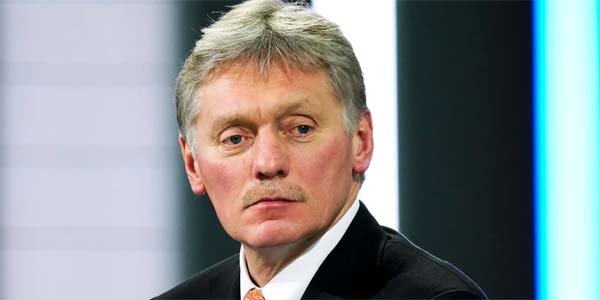
Kremlin spokesperson Peskov stated that Russia cannot interfere in the diplomatic relationship between the United States and India, acknowledging that New Delhi faces external pressure on the tariff front. “We cannot interfere in the diplomatic relations between the US and India. We understand that there is pressure over India,” he said.
Peskov, who spoke to the Indian media ahead of Rusian President Vladimir Putin’s summit meeting with Prime Minister Narendra Modi, said this pressure now influences how Moscow approaches its partnership with India. “This is the reason we have to be careful in creating an architecture of the relationship that must be free of any influence coming from any third country.”
Emphasising India’s independent foreign policy, he noted that Russia recognizes and respects India’s sovereignty in defining its national interests, praising New Delhi’s tradition of strategic autonomy in global affairs. “We know that India is very sovereign in defining its national interests. We admire this characteristic of India,” the Kremlin spokesperson said.
He said that the share of US dollar in global currency was slowly reducing, “Not as fast, but it is a trend”.
Peskov said that Russia. combatting unilateral sanctions from the US and European Union, which he described as “illegal, that had no UN mandate”, had found that many trading partners are willing to trade in national currencies with Moscow.
India has long established a Rupee-Rouble mechanism which allows Indian trade with Russia to flourish despite sanctions on the latter. President Donald Trump has already warned BRICS bloc of countries of which India and Russia are members of issuing any BRICS currency which could pose a challenge to the dollar.
However, trade in Yuan, Rupee and Rouble have been increasing with many trading partners willing to move away from the dollar for a variety of reasons. The spokesperson said “what concerns us is not letting anyone interfere in the trade relations with other countries.”
The US had earlier this year slapped a punitive 50 per cent tariff on India, citing Indian imports of Russian crude, despite anctions by Washington on Moscow for continuing a war in Ukraine. Peskov said that the two sides who are aiming to push bilateral trade to US $ 100 billion, would explore how to increase imports from India, to address the disbalance in trade which is heavily tilted in favour of Russia as India buys huge quantities of crude oil and minerals including gold from its Euro-Asian partner.
“S400 missile battery (sales and joint manufacturing ) will be on the agenda (of the summit meeting) as also SU57 which too will also be on the agenda,” Peskov said, adding that the share of Russian armament in India’s purchases stood at 36 per cent. Indian and Russian officials are preparing a slate of defence agreements that would mark one of the most substantial military-technical packages in years.
New Delhi is expected to push ahead with plans to acquire more S-400 air defence systems after the platform’s performance during Operation Sindoor reinforced its value to India’s air defence grid. He also said that Russia was bringing an offer for Small Modular Nuclear Reactors – an area on which India has been working on.
Civil nuclear cooperation forms a major pillar of Putin’s agenda, with both sides accelerating plans for new nuclear power projects. Russia’s Rosatom and India’s Department of Atomic Energy are working on technical specifications for large VVER-1200 reactors and small modular reactors (SMRs), signalling a shift toward serial construction and higher localisation of components.
India too has its own highly successful SMR programme. Cooperation between the two is a distinct possibility, officials who work in the sector believe. India is also a signatory to the nuclear power plant that Russia is building in Bangladesh, and has helped with various infrastructural equipment in the early stages.