






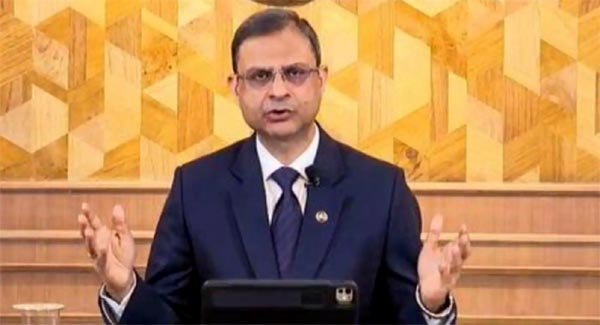
Hyderabad, Nov 18 (UNI) Former Governor of Reserve Bank of India (RBI) Dr. Duvvuri Subba Rao emphasized that the RBI’s core objectives are price stability, supporting growth, employment and ensuring financial stability.
GITAM School of Business, Hyderabad, hosted eminent economist and former Governor of the central bank for a distinguished guest lecture on the theme of ‘Central Banking’. He delivered two insightful sessions titled “The Macroeconomic Mandate of Central Banks” and “Navigating Dilemmas: The Future of Central Banking”.
Defining price stability as “low and steady inflation”, he explained how monetary policy and the repo rate influence inflation, consumption, investment, and overall economic activity.
Dr. Subba Rao began by demystifying the role of the RBI and explaining how central banking influences everyday life.
Calling the central bank “one of the greatest inventions since the beginning of time,” he highlighted its critical functions—printing and distributing currency, formulating monetary policy, managing exchange rates, regulating financial institutions and markets, overseeing payment and settlement systems, serving as the banker to governments and banks, fostering economic development, and advancing financial inclusion.
“Inflation is the biggest tax on the poor,” he said, stressing the importance of maintaining confidence in the currency. He elaborated on how the RBI manages liquidity through interest rates and open market operations, noting that both hyperinflation and deflation can severely disrupt economic functioning. Since inflation expectations can become self-fulfilling, central banks must manage them with great care.
Addressing the respective roles of the government and the central bank, he observed that while price stability is primarily the responsibility of central banks, supply-side shocks require fiscal interventions such as tax adjustments or subsidies. He underscored the need for an independent central bank, as elected governments often operate with short-term horizons.
Reflecting on the 2008 global financial crisis, Dr. Rao shared his experiences as RBI Governor and spoke about the importance of credibility and calm leadership during turbulent times.
He explained how the RBI ensures orderly movement of the rupee and maintains financial stability by regulating banking and non-banking institutions, given the interconnected nature of the financial system.