




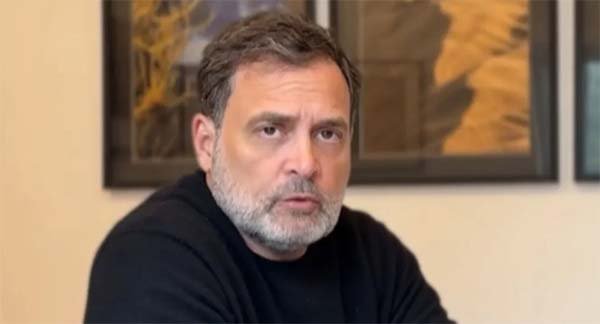
New Delhi, March 9 (UNI) Leader of the Opposition in the Lok Sabha, Rahul Gandhi, today accused Prime Minister Narendra Modi of avoiding a discussion in Parliament on the economic fallout of the ongoing conflict in West Asia, alleging that the government was unwilling to address its impact on India’s economy and ordinary citizens.
Speaking to reporters in the Parliament complex, Gandhi said the war in the region was already hurting India’s economic stability and affecting household finances. “The war underway in West Asia is causing serious damage to our economy, but our compromised Prime Minister does not have the courage to discuss it,” he said.
The Congress leader linked the conflict to recent economic pressures in the country, pointing to rising fuel costs and volatility in financial markets. “The stock market is falling, LPG prices are rising, and global crude oil prices are reaching historic levels — all of which are directly affecting the common man, household budgets, and small and medium businesses,” he said.
In sharp remarks directed at the Prime Minister, Gandhi alleged that Modi was under external pressure and therefore unwilling to take a clear stand. “Prime Minister Narendra Modi is being blackmailed. He has no option but to sell out the interests of the Indian people,” he said.
Gandhi also claimed that the Prime Minister would avoid addressing the issue in Parliament. “Remember my words, he will not come to Parliament,” he added.
The comments come amid heightened political debate over the economic implications of geopolitical tensions in West Asia, a region critical to India’s energy security and trade. India imports a significant portion of its crude oil from the region, and any disruption or surge in global prices tends to have a direct impact on domestic fuel costs, inflation and fiscal management.
Opposition parties have been pressing the government to discuss the situation in Parliament, arguing that rising energy prices and market volatility require a transparent explanation from the Centre.
Tensions in West Asia have historically had a ripple effect on India’s economy due to the country’s heavy dependence on imported energy and the presence of a large Indian diaspora in the region. Political exchanges over the issue are expected to intensify as Parliament continues its session.