






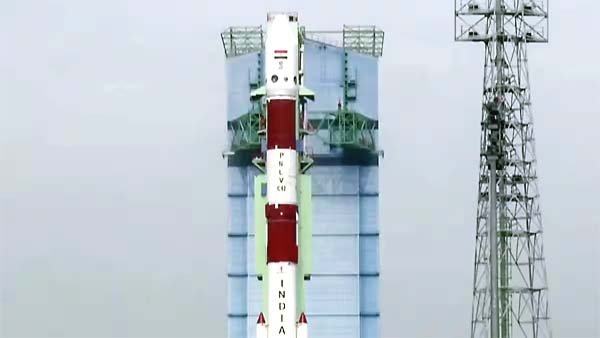
Thiruvananthpuram, Feb 5 (UNI) In response to the recent clustered anomalies observed during the third-stage (PS3) operation of Polar Satellite Launch Vehicle (PSLV) missions, Intelegrid has developed an international-standard, cross-domain technical enquiry framework aimed at strengthening confidence in critical space systems.
The model is designed to enable structured, evidence-based root-cause determination across engineering, manufacturing, supply-chain, and security domains, while explicitly avoiding premature fault attribution or assumptions of malicious intent, Intelegrid industrial cybersecurity engineers told UNI.
It reflects globally accepted investigative practices used in high-reliability aerospace and cyber-physical infrastructure systems.
Recognizing that launch vehicles are tightly coupled, high-energy cyber-physical platforms, Intelegrid notes that anomalies may arise from a wide range of factors, including material behavior, process variation, integration drift, or quality escapes.
International aerospace reliability standards recommend that when anomalies cluster within a common subsystem class, investigations should extend beyond immediate failure physics to encompass upstream production controls, vendor assurance mechanisms, and lifecycle integrity safeguards.
This broader scope aligns with established aerospace accident investigation protocols and critical infrastructure assurance frameworks.
Based on publicly available descriptions, the PSLV anomalies point to third-stage thrust and stability deviations that are consistent with well-documented solid rocket motor failure modes.
These include potential pressure loss, thrust asymmetry, structural breach, nozzle performance variation, or insulation compromise. Such engineering-related causes historically account for the vast majority of launch failures and therefore remain the primary investigative axis, to be examined through telemetry reconstruction, materials forensics, structural modeling, and qualification margin analysis.
At the same time, Intelegrid underscores that international critical-infrastructure assurance doctrine treats strategic aerospace systems as warranting precautionary evaluation of broader threat vectors.
These include supply-chain compromise risks, insider manipulation possibilities, and hypothetical pre-positioned or remotely triggerable compromise scenarios.
Inclusion of these vectors is methodological and preventive, not suggestive of occurrence, and reflects standard practice in defense, nuclear safety, aviation investigations, and cyber-physical system assurance.
Under this framework, supply-chain integrity reviews would cover vendor qualification governance, sub-tier supplier mapping, batch traceability, certification chain validation, materials provenance, chain-of-custody controls, transport and storage condition logs, and tamper-evidence safeguards.
Given the globally distributed nature of aerospace manufacturing, supplier assurance maturity is treated as a core reliability control layer, rather than a peripheral review function.
Similarly, insider risk assessment, a routine component of high-assurance environments, would focus on access authorization records, configuration change controls, override events, segregation-of-duty enforcement, process-stage anomaly correlation, and audit-trail completeness.
Intelegrid emphasizes that such assessment is systemic and precautionary, not accusatory, and is fully aligned with international security governance norms.
Although pre-positioned or remotely triggerable compromise scenarios are historically rare in launch vehicle incidents, modern cyber-physical threat modeling recognizes their relevance within comprehensive hypothesis screening.
Accordingly, the framework calls for firmware integrity validation, configuration baseline hashing, command-path verification, sensor calibration consistency checks, and control-system integrity reviews, all of which are standard measures in secure-systems assurance.
Intelegrid recommends establishing a multidisciplinary expert panel comprising propulsion engineers, aerospace materials scientists, quality-assurance auditors, non-destructive testing specialists, systems safety analysts, supply-chain risk experts, and security assurance professionals.
The proposed methodology includes failure-tree reconstruction, batch comparison analysis, vendor process audits, telemetry forensics, independent peer review, and structured documentation of dissenting technical views, consistent with international investigation governance standards.
To balance transparency with national security and proprietary constraints, the framework proposes a dual-reporting model: a comprehensive technical report for authorized stakeholders and a sanitized public technical summary to maintain institutional, commercial, and insurance confidence.
Clear documentation of corrective-action traceability, validation test evidence, and return-to-flight qualification criteria is emphasized as essential for meeting international assurance expectations.
Intelegrid concludes that multi-domain enquiry inherently strengthens program resilience, regardless of the eventual root cause.
Whether anomalies stem from engineering defects, process drift, supplier quality variance, control breakdowns, or security concerns, each demands a distinct corrective strategy.
Only a cross-domain, evidence-first, and hypothesis-disciplined investigation can reliably discriminate among them—an approach that remains the international gold standard for anomaly resolution in critical space systems.