



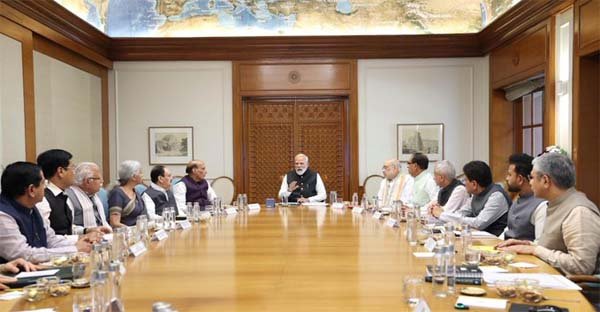
New Delhi, March 22 (UNI) Prime Minister Narendra Modi on Sunday took a sweeping emergency review with top ministers and officials, directing a whole-of-government response to shield India’s economy from the intensifying fallout of the West Asia conflict, particularly its impact on energy supplies and critical logistics networks.
According to sources, officials briefed the prime minister on the rapidly evolving situation and its implications for oil and gas supplies, as well as trade flows that are increasingly being choked by instability in the region.
The urgency stems from the deepening conflict that began on February 28, when the United States and Israel carried out strikes against Iran, triggering retaliation from Tehran. The confrontation has since expanded, with Iran launching strikes against Israel and several Gulf nations, heightening fears of a wider regional war.
A central concern flagged in the meeting was the situation around the Strait of Hormuz, one of the world’s most critical energy corridors. With Iran exercising control over the narrow passage, shipping traffic has been severely restricted in recent weeks. Only a limited number of vessels have been allowed through, disrupting the flow of crude oil and natural gas that accounts for nearly 20 per cent of global energy trade.
For India, heavily dependent on imports to meet its energy needs, the bottlenecks have already begun to translate into supply pressures and heightened market uncertainty. Officials are understood to have discussed contingency planning, including diversifying supply routes and strengthening strategic reserves.
Alongside domestic preparedness, PM Modi has also intensified diplomatic engagement with global leaders since the conflict erupted. He has spoken with counterparts from key energy partners such as Saudi Arabia, United Arab Emirates, Qatar, Kuwait and Bahrain, as well as leaders from Jordan and France. His outreach has also included direct conversations with leaders of both Israel and Iran, reflecting India’s effort to balance its strategic relationships while advocating de-escalation.
Officials familiar with the discussions say the focus has been on ensuring uninterrupted energy flows, exploring contingency routes, and reinforcing diplomatic channels to prevent further escalation. While India has not publicly taken sides, its engagement underscores the high stakes involved- not just for regional peace, but for the global economy.
As the crisis continues to evolve, the Modi’s initiative highlights a dual-track strategy: managing immediate risks while preparing for longer-term shifts in trade and energy logistics. With the Strait of Hormuz under strain and geopolitical tensions far from easing, the coming weeks are likely to test both diplomatic agility and economic resilience.
Engagements have extended further to countries like Malaysia, signalling a broader diplomatic push to stabilise supply chains and maintain critical trade links amid the uncertainty.
The meeting was attended by a broad cross-section of the Cabinet Ministers and senior officials, including Defence Minister Rajnath Singh, Home Minister Amit Shah, External Affairs Minister S. Jaishankar and Finance Minister Nirmala Sitharaman. Petroleum Minister Hardeep Singh Puri, Agriculture Minister Shivraj Singh Chouhan, Health Minister J P Nadda, Commerce and Industry Minister Piyush Goyal and Railways Minister Ashwini Vaishnaw were also part of the deliberations.
Among others present were Ports and Shipping Minister Sarbananda Sonowal, Power Minister Manohar Lal Khattar, Food and Consumer Affairs Minister Pralhad Joshi and Civil Aviation Minister Kinjarapu Rammohan Naidu. National Security Adviser Ajit Doval also attended, along with the Prime Minister’s principal secretaries, P K Mishra and Shaktikanta Das.