



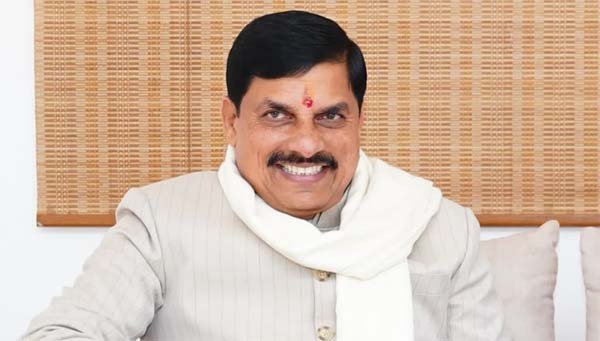
Bhopal: Chief Minister Dr. Mohan Yadav on Thursday expressed his gratitude in the House on the address delivered by Governor Shri Mangubhai Patel during the Budget Session of the Legislative Assembly. He stated that the government is committed to the welfare of all. Madhya Pradesh is the first state in the country to develop the concept of a Rolling Budget. The government has presented a budget of ₹4,38,317 crore for the financial year 2026–27. This is a Rolling Budget that incorporates a forward-looking action plan for the coming years.
Referring to Prime Minister Shri Narendra Modi’s mantra of “GYAN” (Garib, Yuva, Nari, Kisan – Poor, Youth, Women, Farmers), the Chief Minister said that the State has added “I” for Industrialisation and “I” for Infrastructure, transforming it into “GYANII.” He remarked that the budget symbolizes the development journey from knowledge (GYAN) to enlightened progress (GYANII).
Speaking about the State’s economy, Chief Minister Dr. Yadav said that Madhya Pradesh’s economy is once again strong, balanced, and future-oriented. The government has presented the largest and most visionary budget in the State’s history. This ₹4,38,317 crore budget lays the foundation for building a “Golden Madhya Pradesh” by 2047. Madhya Pradesh is likely the first state in the country to introduce a Rolling Budget as a bold and visionary initiative.
Internal Security
Responding to questions raised by members, the Chief Minister stated that the State created history in internal security last year. Before the stipulated deadline, Madhya Pradesh bid a final farewell to Naxalism. Under the guidance of Prime Minister Shri Narendra Modi and Union Home Minister Shri Amit Shah, the State eliminated the 35-year-old Naxal problem before the March 31 deadline. In 2025, 10 Naxalites were neutralized in encounters and 13 surrendered. This ended fear in affected areas and opened new avenues of development.
Health and Medical Education
The Chief Minister stated that the previous year marked a milestone in strengthening healthcare. New medical colleges were initiated under the PPP model. The launch of air ambulance services, steps toward making Madhya Pradesh a medical tourism hub, and expansion of health services across the State have enhanced public confidence.
Government medical colleges have increased from 14 to 19. The operationalization of ESIC Medical College in Indore is a significant step for workers and youth. Currently, the State has 5,550 MBBS seats and 2,862 postgraduate seats. District hospitals in 13 districts including Dhar, Katni, Betul, and Panna are being upgraded into modern medical colleges.
Three new Ayurveda colleges have been approved in one year. The upcoming “Medicity” in Ujjain is progressing toward becoming a global health center. Approval for 46,491 new posts has been granted, and recruitment for 3,850 health cadre posts has begun. The decision to accord a Guard of Honour to individuals who donate their bodies reflects the government’s humanitarian values.
Farmers’ Welfare
Chief Minister Dr. Yadav stated that the government stands shoulder-to-shoulder with farmers. The year 2026 has been declared as “Farmer Welfare Year.” Provisions have been made to increase farmers’ income, expand irrigation, and promote agro-based industries.
Wheat procurement included bonus payments. Thousands of crores were transferred directly into the accounts of paddy and soybean farmers. Under the Bhavantar Yojana, ₹1,500 crore was transferred to approximately 7.17 lakh soybean farmers. During disasters, the government supported over 24 lakh farmers.
In 2025–26, 77.74 lakh metric tonnes of wheat were procured from 9.05 lakh farmers with payments totaling ₹20,213 crore, plus ₹1,360 crore bonus. Paddy procurement reached 51.74 lakh metric tonnes from 7.62 lakh farmers, with payments of ₹11,744 crore.
₹88,910 crore has been allocated for agriculture and allied sectors. Over 15 departments are working together toward doubling farmers’ income. Under the Rani Durgavati Shree Anna Incentive Scheme, tribal farmers cultivating millets receive ₹1,000 per quintal additional incentive.
Economic Development
Madhya Pradesh is among the fastest-growing economies in the country at current prices. The GSDP is estimated at ₹18,48,274 crore in 2026–27, reflecting 10.69% growth over 2025–26. Per capita income has increased by 9%, reaching ₹1.69 lakh. The target is to increase per capita income to over ₹22 lakh by 2047.
The State is adhering to the Fiscal Responsibility and Budget Management Act and remains financially strong. Capital expenditure for 2026–27 exceeds ₹1 lakh crore for the first time. Investment proposals worth ₹30 lakh crore have been received in the past year, with ₹9 lakh crore already grounded.
Industry, MSME and Entrepreneurship
Twenty-five new policies have been implemented to promote industrial growth. Ease of Doing Business has been transformed into Speed, Scale, and Skill of Doing Business. The Jan Vishwas Act has simplified 108 outdated regulations. Forty-eight industrial parks are being developed.
The State has over 23 lakh MSMEs generating employment for over 1.25 crore people. The PM MITRA Park in Dhar will strengthen the textile value chain from farm to foreign markets.
Women Empowerment
Forty-seven percent of start-ups in the State are led by women. A ₹5,000 incentive has been announced for women workers in the ready-made garment sector. Working Women Hostels are being built in major industrial areas. Women have been given 35% reservation in government jobs.
Welfare of Weaker Sections
The government is committed to inclusive empowerment. Ninety-four Sandipani Schools and 63 Eklavya Model Residential Schools are operational. Free coaching for IIT and NEET is provided to tribal youth. Monthly assistance of ₹1,500 is being provided to over 2 lakh women from Baiga, Bharia, and Sahariya communities. Scholarship income limits have been increased to ₹8 lakh.
Infrastructure and Transport
Infrastructure spending exceeds ₹1 lakh crore for the first time. High-speed corridors, four-lane and six-lane highways, overbridges, and tunnels are being constructed. Chief Minister Sugam Transport Service will provide improved public transport in urban and rural areas.
Air connectivity has expanded from 5 to 8 airports, with new airports in Rewa, Satna, and Datia. The goal is an airport every 200 km and an airstrip every 150 km.
Energy
Madhya Pradesh is now a power-surplus state. Renewable energy capacity has increased twenty-fold in 12 years. Sanchi is India’s first Solar City, and Omkareshwar hosts the world’s largest floating solar project. Investments of ₹88,000 crore in energy storage and pump storage will make the State a Green Energy Hub.
Tourism and Simhastha
Tourism has grown significantly, with over 13 crore visitors last year. The tourism budget has been increased by 47.4%. ₹3,060 crore has been allocated for Simhastha 2028 preparations, with total projects worth ₹13,851 crore approved.
Towards a Developed Madhya Pradesh
The Chief Minister stated that Madhya Pradesh is moving from local to global. The State aims to become a $2 trillion economy by 2047. The goal is to increase milk procurement to 52 lakh litres and make Madhya Pradesh the Dairy Capital of India.
The budget reflects the aspirations of 8.5 crore citizens and presents a comprehensive roadmap for infrastructure, investment, employment, industry, education, health, water and energy management, environmental conservation, tourism promotion, and effective welfare delivery.
Chief Minister Dr. Yadav also informed the House about the latest achievements and innovations of the State Government.