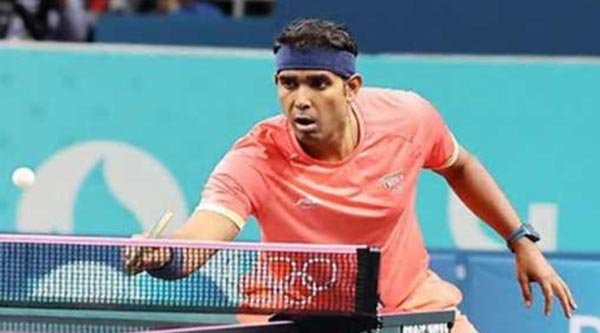






Bengaluru, Dec 15 (UNI) In a hall filled with the quiet hum of ambition at the JAIN Global Campus, Indian table tennis legend Sharath Kamal stood as more than a champion—he was a living testament to perseverance, balance, and the power of structured support.
Monday’s event, officially marking the unveiling of new sports initiatives, unfolded as a larger reflection on India’s evolving sporting landscape.
Sharath Kamal, a five-time Olympian and India’s flag bearer at Paris, spoke of creating ecosystems where athletes, coaches, and support staff could flourish, while education remains an inseparable part of an athlete’s journey.
“Whether or not India hosts the Olympics in 2036, I am confident that with the right support, structured training, and initiatives like this, Olympic medals will follow for the country,” he said, his words carrying the weight of decades on competitive courts.
He highlighted the importance of balancing sports with academics, explaining that a well-rounded education equips athletes with strategic thinking, decision-making skills, and the tools to build sustainable careers.
Reflecting on his own life, Sharath Kamal recalled starting table tennis at the age of four, navigating the challenges of balancing school with training, and working within a society that in his early years offered limited acceptance of sports as a professional career.
Institutional support, he said, was vital to turn raw talent into international success.
Sharath Kamal’s career, studded with accolades, is extraordinary: 13 Commonwealth Games gold medals across five editions, two historic Asian Games medals in 2018—the first in six decades for India in table tennis—and appearances in five Olympic Games.
Yet, despite these accomplishments, he said an Olympic medal remains the ultimate goal. Committed to guiding young athletes, he stressed that the next generation holds the key to realizing India’s Olympic dreams. In recognition of his contributions, he was awarded the prestigious Khel Ratna in 2022.
Sharing the stage, former Manchester City star Terry Phelan brought a footballing perspective to the conversation, demonstrating that the lessons of sport transcend disciplines.
Phelan recounted his journey from the streets of Salford, Manchester, to playing for top clubs including Leeds United and Manchester City, as well as representing the Republic of Ireland.
It’s not just about producing footballers. It’s about shaping individuals with the love, integrity, and passion that sports teach us,” he said, emphasizing that personal development and character-building are as important as athletic excellence.
Phelan spoke of the importance of discovering talent early and bridging the gap between potential and opportunity. From being scouted at age 12 to the pressures of professional football, his story illustrated the role mentorship and structured guidance play in nurturing sporting careers.
“Our mission is to discover talent and provide personalised guidance for long-term development, combining academic excellence with world-class coaching,” he added.
The event also highlighted the collaboration between Jain Sports and James Sports’ elite football programme with Manchester City Football Club, aiming to redefine sports development in India.
The programmes offer clear pathways for young athletes—from grassroots participation to high-performance training—alongside mentorship, professional guidance, and academic support.
Terry Phelan, appointed director of the programme, underlined that these initiatives are designed to groom not just athletes, but well-rounded individuals who can pursue sporting dreams without compromising education.
For Sharath Kamal and Phelan, the message was clear: the journey to excellence is never a solitary pursuit. It requires structured ecosystems, disciplined training, guidance, and the courage to dream big. As India looks ahead to future Olympics, these initiatives represent more than just training programmes—they are a roadmap for building champions, both on the field and in life.
Olympic medals will follow with right eco system: Sharath Kamal