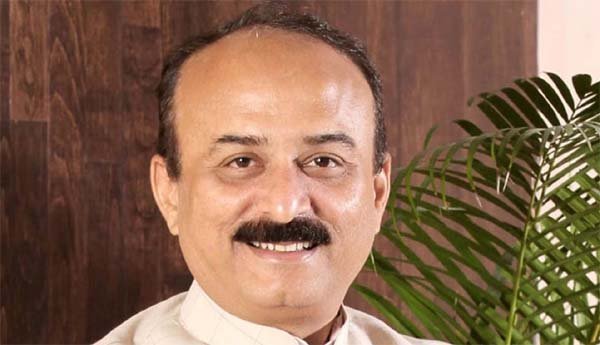






New Delhi, Dec 13 (UNI) Delhi Education Minister Ashish Sood on Thursday tore into the previous AAPDa government’s much-hyped “education revolution,” calling it less a reform and more a manipulative strategy to inflate school performance statistics.
Ashish Sood on Saturday said that data presented in the Rajya Sabha has exposed the previous AAP government’s “education revolution,” alleging that it was not a reform-driven initiative but a “filtering policy” that pushed students out of the mainstream system to improve statistics.
Reacting to a written reply by the Ministry of Education in Parliament, Sood said it has now become evident that the policy of shifting large numbers of students who failed Class 9 to the National Institute of Open Schooling (NIOS) was aimed at polishing performance figures rather than strengthening students’ futures.
Notably, it was not a BJP leader but AAPDa’s own Rajya Sabha MP, Swati Maliwal, who raised a question in Parliament over the large-scale shifting of students who failed Class 9 to the National Institute of Open Schooling (NIOS). She asked whether this move was truly intended to give students a second chance or merely to artificially boost school results.
“When even an AAP MP is compelled to ask whether children are being pushed out of the system to inflate performance statistics, the truth of that so-called model becomes clear on its own,” Sood said.
According to the Ministry of Education’s reply, over 3.20 lakh students failed Class 9 in Delhi government schools over the last five years.
The year-wise data reveals a worrying rise in the number of students failing Class 9 in Delhi government schools. In 2020–21: 31,541 students failed, followed by 28,548 students in 2021–22. The figure rose sharply to 88,421 students in 2022–23 and peaked at 1,01,344 students in 2023–24, before slightly declining to 70,296 students in 2024–25. Altogether, 3,20,150 students failed Class 9 over the five-year period, highlighting the scale of the issue.
During the same period, more than 71,000 students were admitted to NIOS, with 29,436 admissions recorded in 2022–23 alone.
Sood said that while NIOS can serve as an alternative educational pathway, the scale of admissions indicates it was used as a diversion route rather than a support mechanism. “This was not education reform, but a systematic sidelining of students to manage optics,” he alleged.
He added that the data has brought clarity for the people of Delhi and reaffirmed the need for policies that focus on retaining students within the mainstream system and genuinely improving learning outcomes, rather than masking failures through administrative shortcuts.
Not reform but statistics management: Ashish Sood slams AAP’s education model