


By Ramesh Bhan
New Delhi, Jan 17 (UNI) Has the 2025 Nobel Peace Prize lost its sheen? Did Venezuelan Opposition leader Maria Corina Machado belittle the prestige of the coveted award by giving it away?
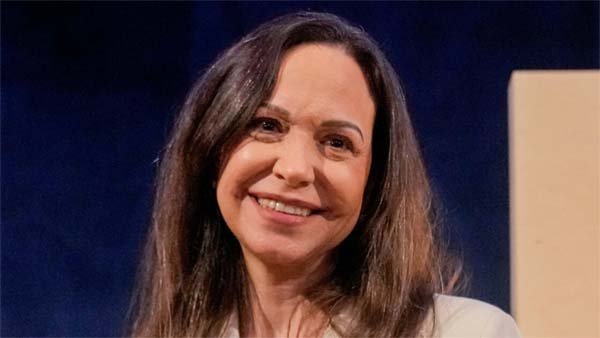
María Corina Machado, who presented her 2025 Nobel Peace Prize medal to US President Donald Trump as a symbolic gesture of ‘gratitude for his support of Venezuela’s freedom struggle,’ faces criticism and joins a group of Nobel laureates who have rejected or presented their awards to others for different reasons.
The general perception is whether Machado should have presented it to Trump, particularly days after US forces invaded her country and arrested her country’s President Nicolas Maduro, along with his wife. Her gesture has sparked controversy, especially in Norway, with critics viewing it as an attempt to curry political favour or a bargaining chip.
While presenting her gold Nobel medal to President Trump during a private White House meeting, Machado described it as an ‘act of gratitude on behalf of the Venezuelan people for his role in the removal of Nicolás Maduro.’
Machado put the award in a proper frame with a signed note which said ‘To Donald J Trump, in gratitude for your extraordinary leadership in promoting peace through strength, advancing diplomacy and defending liberty and prosperity.’
She said the award was presented as a ‘personal symbol of gratitude on behalf of the Venezuelan people in recognition of President Trump’s principled and decisive action to secure a free Venezuela.’
Trump, who had been demanding the award, called it a “wonderful gesture of mutual respect” and confirmed he intends to keep the physical medal. Despite this symbolic exchange, the Nobel Committee emphasised that Trump is not officially recognised as a Nobel laureate.
The Nobel Committee, while announcing the award for Machado in October 2025, had said they had decided to award the 2025 Nobel Peace Prize to Maria Corina Machado for her ‘tireless work promoting democratic rights for the people of Venezuela and for her struggle to achieve a just and peaceful transition from dictatorship to democracy.’
However, the ethical implications of Machado’s action are widely debated, with critics viewing it as a political manoeuvre that diminishes the prestige of the Peace Prize.
Machado’s gesture has been criticised in many political circles, particularly in Norway. The decision has been widely condemned by Norwegian politicians and some international observers, who view it as a political stunt that demeans the prestige and values of the Nobel Peace Prize.
Some Norwegian political leaders described the act as “absurd,” “meaningless,” and “embarrassing and damaging” to the Nobel Peace Prize’s reputation. Some critics suggest Machado used the medal as a “bargaining chip” to curry favour with Donald Trump and secure US support, rather than focusing on the democratic movement in Venezuela itself.
Many critics point out the irony of the award, meant to honour a struggle for democracy and human rights, being given to Trump, who is perceived by many in Norway as a leader who undermines liberal democracy.
President Trump was asked by reporters ‘why did you want someone else’s Nobel Prize?’ He said ‘she offered it to me. I thought it was very nice. She said you have ended eight wars and nobody deserves this prize more than in history than you do. And I thought it was a very nice gesture. And by the way, I think she is a very fine woman, and we will be talking again.’
The Norwegian Nobel Committee and the Norwegian Nobel Institute issued an official statement clarifying that a Nobel Peace Prize cannot be transferred, shared, or revoked once it has been awarded.
‘According to the Statutes of the Nobel Foundation, § 10, “No appeals may be made against the decision of a prize-awarding body about the award of a prize”.
None of the prize awarding committees in Stockholm and Oslo has ever considered revoking a prize once awarded.
As a matter of principle, the Norwegian Nobel Committee will not comment upon what the Peace Prize Laureates may say and do after they have been awarded the prize. The Committee’s mandate is restricted to evaluating the work and efforts of the nominated candidates up to the moment it is decided who shall be awarded the Nobel Peace Prize for a given year.
A Nobel Prize can neither be revoked, shared, nor transferred to others. Once the announcement has been made, the decision stands for all time.
This does not prevent the Committee from following the future endeavours of laureates closely, even though it expresses neither its concerns nor its acclamation.
The Norwegian Nobel Committee said the decision is final and stands for all time. A spokesperson for the Norwegian Nobel Institute clarified that while the physical medal can change hands (as a personal gift), the official title of Nobel Peace Prize Laureate remains permanently with the original recipient.
There are instances of Nobel laureates or their families giving away or selling their medals for various reasons. Some have done it for humanitarian causes, and some decisions have become controversial.
The most controversial handover was that of Knut Hamsun, a Norwegian writer who was awarded the Nobel Prize in Literature in 1920. During the Second World War, Hamsun supported the Germans. He met high-ranking Nazi officers, including Adolf Hitler and Nazi Minister of Propaganda Joseph Goebbels. Hamsun gave his Nobel Prize medal to Goebbels in 1943. Since then, its whereabouts are not known.[
Dmitry Muratov, a Russian journalist, television presenter and the former Editor-in-Chief of the Russian newspaper Novaya Gazeta, was awarded the 2021 Nobel Peace Prize jointly with Marisa Ressa for “their efforts to safeguard freedom of expression, which is a precondition for democracy and lasting peace.”
On March 22, 2022, Muratov decided to sell his Nobel Peace Prize medal at an auction, donating the proceeds to UNICEF for the benefit of refugees from Ukraine. The medal auction was carried out by Heritage Auctions and was sold for 103.5 million USD, the highest price ever recorded for a Nobel medal.
Nane Annan, the widow of former UN Secretary General Kofi Annan, donated her late husband’s medal to the United Nations.
American novelist Ernest Hemingway, known for an economical, understated style that influenced later 20th-century writers, was awarded the Nobel Prize in Literature in 1954. He reportedly placed his Literature Prize medal at a shrine in Cuba.
Le Duc Tho, a Vietnamese revolutionary, diplomat and politician, was the first Asian to be awarded the Nobel Peace Prize jointly with former US Secretary of State Henry Kissinger in 1973. But Tho declined to accept the award, claiming that peace had not yet been established, and that the United States and the South Vietnamese governments were in violation of the Paris Peace Accords.
Notwithstanding some of these famous handovers of the Nobel Prizes, the Nobel Foundation and the Norwegian Nobel Committee maintain that the integrity of the prize itself is separate from the actions a laureate chooses to take with the physical award (the medal, diploma, and prize money) after they receive the honour.
The statutes explicitly allow the recipient to dispose of their physical award as they wish. While the act of giving the physical medal to a political figure can be seen as controversial or a political manoeuvre by the laureate, the Nobel title and the honour remain irrevocably with the original winner, María Corina Machado in this case.
The committee itself does not endorse or revoke the action, as it is outside its jurisdiction once the prize is awarded.
The divergent actions taken by various laureates over the decades—ranging from funding humanitarian aid for children in war zones (Dmitry Muratov) to giving medals to controversial political figures (Knut Hamsun who gave his literature medal to Joseph Goebbels in 1943)—highlight that the laureates’ actions reflect their personal and political views, not a change in the Nobel institution’s standards or value system.
The Nobel Prize measures 6.6 cm in diameter, weighs 196 grams and is struck in gold. On its face, a portrait of Alfred Nobel and on its reverse, three naked men holding around each other’s shoulders as a sign of brotherhood. A design unchanged for 120 years.