




Delhi/Dhaka, Dec 19 (UNI) Bangladesh witnessed a night of widespread violence from late Thursday into Friday morning, as coordinated mobs went on a rampage across Dhaka and several other cities following the death of Sharif Osman Hadi, a key leader of the Inqilab Mancha movement. The unrest has raised serious concerns over internal security, press freedom, and the safety of diplomatic missions in the country.
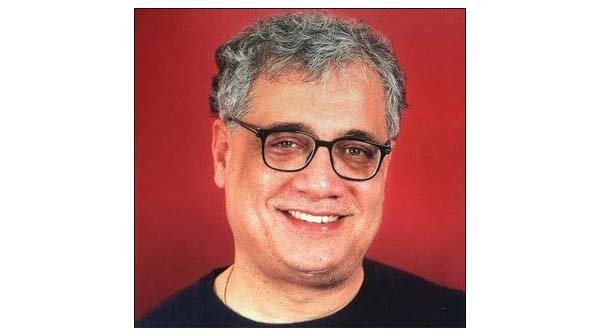
The violence erupted soon after news broke of Hadi’s death in a Singapore hospital, where he had been undergoing treatment since December 12 after being shot in the head during an election campaign event in Dhaka’s Bijoynagar area. Hadi,the convener of Inqilab Mancha and known for his anti-India and anti–Sheikh Hasina rhetoric, was a prominent face of the youth-led movement that ousted former Prime Minister Sheikh Hasina.
As news of his death spread, his supporters, radicalised students, took to the streets, unleashing a wave of arson, vandalism, and targeted attacks that continued throughout the night.
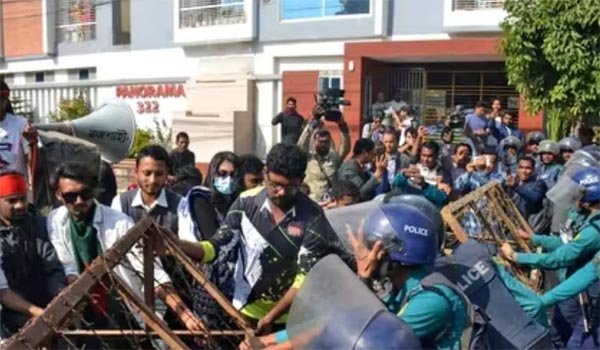
In a deeply alarming development, mobs attempted to storm Indian Assistant High Commissions in Khulna and Chattogram. In Chattogram, protesters marched toward the mission building, broke through police barricades on Zakir Hossain Road, and staged a sit-in outside the premises. Slogans such as “Boycott India,” “Burn Awami League dens,” and “Hadi’s blood will not go in vain” echoed through the streets.
In Dhaka, protesters brought bulldozers to demolish what remained of Bangabandhu Sheikh Mujibur Rahman’s historic residence at Dhanmondi 32, a site of immense national significance. Several offices and homes of Awami League leaders were also attacked or set ablaze, including the residence of former education minister Mohibul Hasan Chowdhury Nowfel in Chashma Hill and the house belonging to the brother of former Dhaka-18 Awami League lawmaker Habib Hasan was set on fire in Uttara.
The country’s leading media houses were among the primary targets. Protesters ransacked and set fire to the offices of The Daily Star and Prothom Alo in Dhaka’s Karwan Bazar area. Hundreds of demonstrators vandalised multiple floors of the Prothom Alo building, throwing furniture, documents, and equipment onto the streets before setting them ablaze.
At The Daily Star office, the situation turned grave as at least 20 journalists and staff members were reportedly trapped on the rooftop amid thick smoke and flames were spreading rapidly through the building. Firefighters struggled to control the fire and army was deployed to control the raging mob. Fire service units from Tejgaon station eventually brought the blaze under control around 1:40 am.
“There is too much smoke inside. It’s hard to breathe even on the roof,” said Subrata Roy, a sub-editor trapped with colleagues. Another reporter, Abdullah Md Abbas, appealed on social media, saying, “All of my colleagues are on the rooftop. They can’t breathe. Please pray for us.” Army personnel later helped secure the area and facilitate rescue operations.
Separately, the offices of Chhaya Naut, a leading secular cultural organisation, were vandalised once again, reinforcing fears of the systematic targeting of secular institutions and voices.
The residence of former Chittagong Hill Tracts Affairs Minister Bir Bahadur U Shwe Sing was set on fire by protesters in Bandarban around midnight on December 19. A freedom fighter of Bangladesh, the tribal Buddhist leader is a highly respected figure in the hill tracts region.
The incident occurred at his home in the Rajar Math area of Bandarban town, eyewitnesses said.
Authorities had not issued an official statement on the incidents at the time of filing this report, and it remained unclear whether any arrests had been made.
The attacks have triggered alarm both domestically and internationally over the security situation and the protection of diplomatic missions, journalists, and civil society institutions in Bangladesh.
Earlier this week, India summoned Bangladesh High Commissioner Riaz Hamidullah to urge the neighbouring country to ensure the safety of Indian diplomats and diplomatic missions.