

New Delhi, Oct 3 (UNI) The Ministry of External Affairs today dodged a direct answer on the upcoming visit next week of Afghan Taliban Foreign Minister Amir Khan Muttaqi, an event that will be watched keenly across the world, especially in neighbouring Pakistan with which Kabul’s ties have deteriorated significantly.
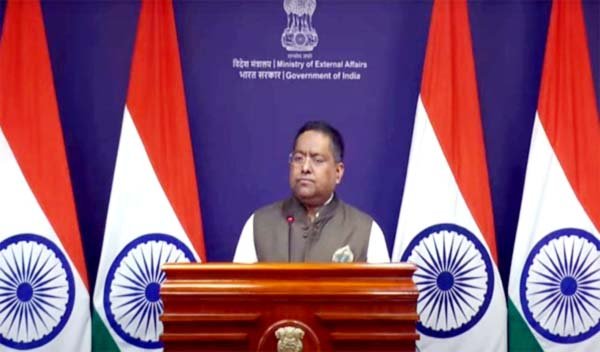
Answering a barrage of questions on the upcoming visit of the Afghan FM, the Ministry of External Affairs spokesperson Randhir Jaiswal only said that the UNSC has granted him an exemption from the travel ban to come to India.
“You would have seen the UNSC committee has given an exemption to the interim Foreign Minister of Afghanistan to travel to New Delhi. We will share further information as available,” is all the spokesperson was willing to divulge.
According to the UN website, on September 30, “the Security Council Committee established pursuant to resolution 1988 (2011) approved an exemption to the travel ban for Amir Khan Motaqi (TAi.026) to visit New Delhi, India, from 9 to 16 October 2025.”
Pressed to say more, the MEA spokespersons said that India has been having conversations with the interim government in Afghanistan.
“You would have seen the telecon that had taken place some time back between External Affairs Minister and Foreign Minister Muttaqi, as also we’ve had conversation between the Joint Secretary in charge and his counterparts in the Afghan side,” he said.
He said that after the September earthquake in Afghanistan’s Kunar province, India had promptly sent relief material. “Subsequently we sent more relief material via Chabahar,” he said, adding, “We will keep you updated with the developments that will happen in this regard.”
This will be the first ministerial-level visit from the Taliban regime to India since the group took control of Afghanistan on August 15, 2021. Before visiting India, Muttaqi is set to visit Russia on October 7 to participate in the Moscow Format meeting on Afghanistan, and then travel to New Delhi.
External Affairs Minister S Jaishankar had spoken to the Afghan Taliban FM over the phone, on September 1, to convey that India had delivered 1,000 family tents and food material in the aftermath of a massive quake that hit Afghanistan. The phone call between EAM Jaishankar and the Afghan Taliban Foreign Minister was the highest level contact between the two sides, and came after Foreign Secretary Vikram Misri met with Muttaqi in Dubai in January this year.
Muttaqi was set to visit Pakistan in August, but the UNSC declined to lift the travel ban. Relations between Kabul and Islamabad have deteriorated, since the Taliban came to power, especially over the terror attacks launched by the Tehreek-e-Taliban Pakistan that have been responsible for the deaths of many Pakistani security forces personnel. Islamabad accuses the Afghan government of providing safe haven for the TTP along its borders, which Kabul has denied strongly. Afghanistan is also miffed over the deportation by Pakistan of thousands of Afghan refugees, many of who had been living in Pakistan for several years.
While India has not officially recognised the Taliban government, it is continuing with its developmental and humanitarian aid for the Afghan people. India has a “technical” team in place at the Indian Embassy in Kabul.
Ambassador Parvathaneni Harish, India’s Permanent Representative to the UN, addressing the United Nations Assistance Mission in Afghanistan on September 17, said that India was among the first countries to provide humanitarian assistance to Afghanistan in the aftermath of the quake, delivering 1,000 family tents and 15 tons of food supplies to the affected provinces. India also provided an additional 21 tons of relief materials, including essential medicines, hygiene kits, blankets and generators.
Since the Taliban formed government in Kabul, India has supplied around 50,000 tons of wheat, over 330 tons of medicines and vaccines, 40,000 liters of pesticides and other essential social support items, the Indian envoy told the UN.