



By Venkatachari Jagannathan
Sriharikota (Andhra Pradesh) Dec 24 (UNI) India’s heavy lift rocket LVM3 rocket on Wednesday morning successfully slung the American communication satellite BlueBird 6 into a Low Earth Orbit (LEO).
Weighing about 6.1 ton, the BlueBird 6 satellite belongs to the Nasdaq listed satellite communication player AST SpaceMobile, USA.
Speaking after the launch Indian Space Research Organisation (ISRO) Chairman Dr.V. Narayanan said: “I am happy to announce that LVM3M6 has successfuly injected the Bluebird Block-2 US satellite successfully and precisely into the intended orbit”.
All the vehicle parameters performed well and this is the second LVM3 mission in a short span of 52 days, while thanking the entire ISRO team for the success of the mission.
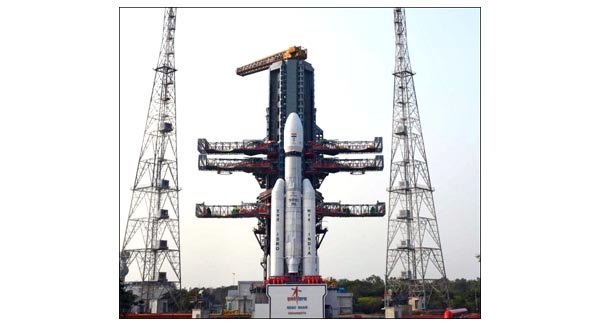
At 8.55 a.m. the 43.5 metre tall and weighing 640 ton, the LVM3 rocket blasted off from the second launch pad at the Satish Dhawan Space Centre (SDSC) rocket port carrying BlueBird 6.
The rocket began ascending towards the skies with a strong deep growl that reverberated like a thunder roll and with thick orange flame leaving behind an anaconda like long and thick white plume.
At the Mission Control Centre, ISRO scientists were glued to their computer screens watching the rocket’s upward flight and the data generated.
LVM3 (formerly GSLV Mk III) is nicknamed as `Bahubali’. In successful movie Bahubali, the well built hero easily lifts a heavy Lingam. Similarly LVM3 is currently India’s heavy lift rocket.
About 16 minutes into its flight, the LVM3 set free the BlueBird 6 in the intended LEO.
With this successful launch, the LVM3 rocket maintained its impeccable record of eight consecutive successful missions.
The LVM3 is a three-stage rocket comprising two solid strap-on motors (S200), a liquid core stage (L110), and a cryogenic upper stage (C25).
It can carry approximately 4 tons to Geosynchronous Transfer Orbit (GTO) and 10 tons to LEO, with ISRO actively working to raise its GTO capacity to 5 tons.
At about 6.5 ton BlueBird 6 will be the heaviest satellite ever placed into LEO by the LVM3, which currently boasts a 100% launch success rate.
BlueBird 6 marks the debut of AST SpaceMobile’s next-generation satellite fleet. Once deployed, it will feature the largest commercial phased array in LEO, spanning nearly 2,400 sq ft—a 3.5× increase over its predecessors, BlueBirds 1–5—and delivering 10× more data capacity, the company said.
AST SpaceMobile is developing what it calls the world’s first and only space-based cellular broadband network designed to connect directly to everyday smartphones for commercial and government users.
“Our next-generation satellites will soon enable ubiquitous cellular broadband coverage direct to everyday smartphones from space,” Abel Avellan, Founder, Chairman and CEO of AST SpaceMobile had said earlier.
“As an American company, we are proud to demonstrate US leadership in space innovation while pioneering the next era of global connectivity,” Avellan said.
The company is accelerating production, with hardware equivalent to 40 satellites expected to be completed by early 2026.
It anticipates five orbital launches by the end of Q1 2026-all expected to be launched by SpaceX rockets.
With satellite launches spaced one to two months apart, aiming for 45–60 satellites in orbit by the end of 2026 to enable continuous coverage across the US and select markets, AST SpaceMobile had said.
AST SpaceMobile’s rapid expansion is supported by nearly 500,000 sq ft of manufacturing and operations facilities worldwide—about 400,000 sq ft of which are in the U.S.—and a global workforce of nearly 1,800 employees, most based in the United States.
The BlueBird 6 launch contract was arranged through NewSpace India Ltd, the commercial arm of India’s Department of Space.
AST SpaceMobile will become the second satellite broadband customer to fly on LVM3, after Eutelsat OneWeb, which launched 72 satellites using two LVM3 missions in 2022 and 2023.
India’s Bahubali rocket LVM3 orbits American communication satellite successfully in LEO