





Jayanta Roy Chowdhury
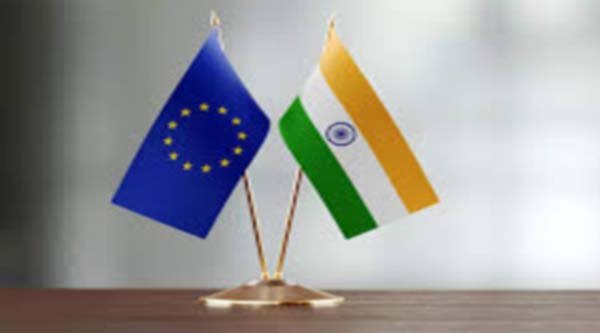
New Delhi, Jan 10 (UNI) In the midst of US tariff threats to India and an imbroglio over American demands that Greenland be handed over, New Delhi and Brussels are racing to bridge gaps on carbon pricing, steel access and market openings, with a new urgency to clinch a long-delayed free trade pact.
India’s commerce minister Piyush Goel had remained locked in marathon trade talks on Friday with his European union counterpart Maros Sefovic to try and come to a consensus on contentious issues including Europe’s controversial carbon tax and India’s red lines on farm subsidies.
Top commerce ministry officials told UNI, “We need the deal, they need it too as both want stable markets, which are shielded from tariff threats and we both want to decouple from China-led supply chains.
India and EU both want to clinch the deal ahead of the Republic day visit by European Commission President Ursula Von Der Leyen and European Council President Antonio Costa.
“We are near … very near as far as I know. Compromises are being found over EU’s carbon border adjustment mechanism tax and India’s labour movement demands,” said Prof Biswajit Dhar, former Head of the Centre for WTO Studies at Indian Institute of Foreign Trade (IIFT).
“By the time European union leaders arrive in New Delhi for the Republic Day celebrations later this month, trade negotiators on both sides hope to have something concrete to show,” Dhar said.
Other than the threat from US tariffs and policy decisions, other trategic considerations are also reshaping the talks.
Under its Critical Raw Materials Act, the European union has identified India as a key potential partner for diversifying supplies of rare earths and other strategic minerals in an effort to reduce dependence on China.
India’s state-run miner, Indian Rare Earths, produces between 1,300 and 1,500 tons of neodymium oxide annually, a material vital for electric vehicles, wind turbines and advanced electronics. “Friend-shoring” such supply chains, European officials argue, could cushion the bloc against future disruptions.
The talks which had dragged on for more than decade, have more or less settled other contentious points and India can hope for tariff concessions on a host of goods ranging from textiles, gems and jewellery to electronics and steel.
While EU will gain market access at far lower tariff points for high end automobiles, wine and “possibly even certain dairy products, with safeguards for our dairy sector”, said officials close to the discussion.
At the heart of the impasse is the European Union’s Carbon Border Adjustment Mechanism, or CBAM, a policy that has come to symbolize the friction between Europe’s climate ambitions and India’s trade priorities.
Introduced to prevent “carbon leakage,” CBAM seeks to level the playing field by taxing imports of carbon-intensive goods, including steel, aluminium, cement and fertilisers, a carbon price equivalent to what European producers pay under the EU’s Emissions Trading System.
India has sought trade-offs from this tax for carbon credits lodged by local producers of steel and other products which would have been hit by this duty, with price increases as a result of the tax by 15-20 per cent.
Indian negotiators are not asking for blanket exemptions, which Brussels has made clear are off the table.
Instead, people familiar with the talks say New Delhi is pressing for flexibility within the trade agreement which would recognise India’s domestic carbon-reduction efforts, including sector-specific mitigation measures and a planned Carbon Credit Trading Scheme, which is slated for a rollout beginning in 2026.
The aim, Indian officials argue, is to acknowledge “equivalent effort,” even if policy instruments differ.
Trade flows underscore the stakes. The EU is India’s largest trading partner with merchandise trade alone worth USD 140 in 2024, representing some 11.5 per cent of India’s total trade. For EU, India is its ninth largest trade partner, but also it’s fastest growing one.