




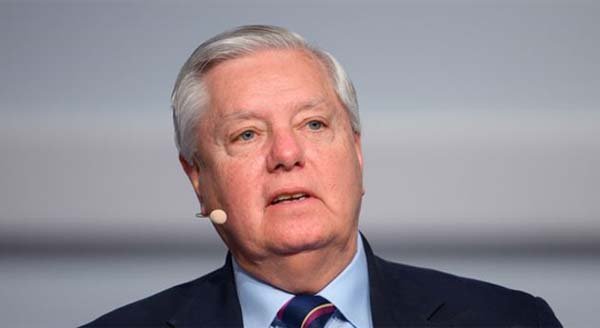
New Delhi, Feb 03 (UNI) US Senator Lindsey Graham on Monday said India has “earned” the tariff reduction announced under the new India-US trade deal, linking it to New Delhi’s recalibration of Russian oil purchases as the war in Ukraine will enter its fifth year on Feb 24, 2026.
In a post on X, Graham credited US President Donald Trump’s strategy, saying economic pressure on countries buying Russian energy appears to be working. He pointed to the recent trade agreement with India, under which Washington lowered reciprocal tariffs on Indian goods to 18 per cent.
“Well played, President Trump. I think your message about ending this war—by having Putin’s customers who prop up his war machine recalculate—is working,” Graham said.
The Senator claimed that India’s conduct justified the tariff reduction and expressed hope that other countries would follow suit.
“Through their behaviour, India has more than earned this reduction. I’m hoping that the other big nations that buy Russian oil will follow India’s direction,” Graham added.
Linking the trade decision to broader geopolitical objectives, Graham said Russian President Vladimir Putin would only come to the negotiating table when pressure intensifies.
“Putin will only come to the table when the pain is so great. We’re not there yet, but with India’s actions, we are moving closer. End the bloodbath in Ukraine now,” he said.
His remarks came after President Trump earlier in the day announced that the US and India had agreed to a trade deal, reducing reciprocal tariffs from 25 per cent to 18 per cent “out of friendship and respect” for Prime Minister Narendra Modi.
The announcement ended nearly 11 months of uncertainty that had pushed bilateral trade relations to their lowest point in over two decades. Under the historic agreement, the United States will reduce tariffs on Indian goods from as high as 50 per cent to 18 per cent.
India and the United States said the agreement would provide immediate relief to Indian exporters. President Trump confirmed the development, stating, “We agreed to a Trade Deal between the United States and India, whereby the United States will charge a reduced Reciprocal Tariff, lowering it from 25 per cent to 18 per cent. They will likewise move forward to reduce their tariffs and non-tariff barriers against the United States to zero.”
The tariff reduction is expected to improve the competitiveness of Indian goods in the US market, enhance order visibility, ease margin pressures, and support stronger pricing power for export-oriented sectors.