





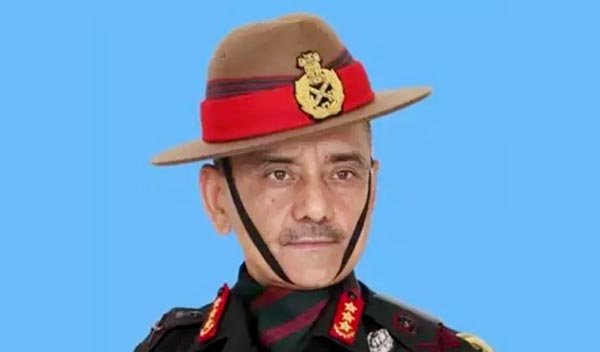
New Delhi, Dec 23 (UNI) Emphasising the need for military readiness across multiple conflict scenarios, Chief of Defence Staff General Anil Chauhan on Tuesday said India must be prepared to fight short-duration, high-intensity wars to effectively deter terrorism.
The General also stressed that the country must maintain readiness for a land-centric, prolonged conflict due to its unresolved land disputes, even as efforts should be made to avoid such situations.
Addressing ‘Techfest 2025’ at the Indian Institute of Technology-Bombay (IIT-B) Chauhan spoke about the kind of threats and challenges India should be prepared for.
Hinting at Pakistan and China, Chauhan said, “I think this should be based on two major facts. One is that both our adversaries are, one is a nuclear weapon state and the other is a nuclear armed state. So hence, we should not allow that level of deterrence to be breached.”
“And second, we have territorial disputes with both of them. Hence, in my view, we should be prepared to fight short-duration, high-intensity conflicts to deter terrorism, something like Operation Sindoor, that’s one. Second, we should be prepared for a land-centric, long-duration conflict, because we have land disputes, yet try and avoid it” he added.
Chauhan further said that India must exploit new domains and create asymmetry with its weaker adversary, and yet not allow these asymmetries to be exploited by other nations. “Terrorism and warfare, will remain a threat and will require both defensive and offensive response,” he said.
Talking about the changing dynamics of the warfare, he said that the situation has been further aggravated by transnational ideologies like jihad or multinational collaborates, who sometimes market capital exceeds that of some nations.
“Today, we have organised armed forces of a state. Apart from that, we have mercenaries which fight. We have private security agencies which fight. We have transnational citizens, netizens fighting and operating in the digital domain. We have social influencers shaping perceptions in the cognitive domain. Individuals are exploiting knowledge on the internet to make explosives, chemical weapons, maybe tomorrow biological weapons. So, the arena of warfare actually has expanded many folds.”
The CDS further said that the character of warfare is undergoing a fundamental transformation, with threats no longer limited to traditional armed forces of nation-states and battlefields rapidly expanding into new and previously uncharted domains.
Stating that modern conflict now involves a wide range of capabilities, he said, “The varied types of competencies we encounter today are not restricted to organised armed forces which we earlier associated only with nation-states.”
General Chauhan explained that battlefields, which ultimately determine the outcome of wars, have steadily evolved over time. “For thousands of years, all battlefields were on land. In the last 400 to 500 years, warfare expanded into the maritime domain, and over the past 100 years, into the air,” he said, adding that air warfare is relatively new in historical terms.
He noted that warfare is now at the cusp of another major shift. “We are entering an era where conflict will expand into newer and unknown domains, cyber, space, the electromagnetic spectrum and the cognitive domain,” he said, stressing that these areas are no longer niche military spaces but integral to daily civilian life, making them critical and contested.
Highlighting the limitations of traditional warfare, the CDS said conflicts fought in land, sea and air domains tend to be “long-lasting, brutal and resource-intensive.” Citing examples, he referred to the wars in Ukraine and Gaza, saying such conflicts often become prolonged “slugfests” due to the predictability of platforms and tactics.
In contrast, warfare in new domains is faster and more decisive. “These wars are shorter in duration, high in tempo, and their effects are felt almost instantaneously,” he said, pointing to Operation Sindoor as an example of multi-domain operations delivering swift results.
General Chauhan emphasised that future conflicts will require simultaneous operations across multiple domains. “Multi-domain operations will no longer be an option but a necessity,” he said, calling for greater innovation, integration and indigenous capability development to maintain technological asymmetry and battlefield surprise.