





BY RAMESH BHAN
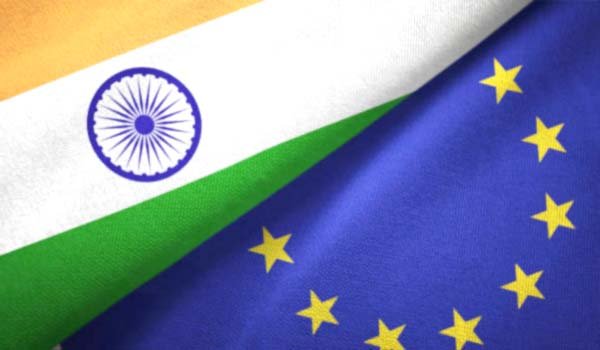
New Delhi, Jan 30 (UNI) If the Free Trade Agreement (FTA) with the 27-nation European union (EU) positions India as a strategic ‘Third Pole’ in the global financial architecture, the Security and Defence Partnership catapults India to the level of an important NATO ally, without being its member.
(In international relations, the strategic “Third Pole’ is used to describe an emerging global power, particularly India, acting as a balancer in a multi-polar world. In other words, India is emerging as a third independent pole to avoid over-dependence on the US-China (G2) binary framework.)
The two sides signed the Security and Defence Partnership alongside the crucial FTA on January 27, marking the first overarching framework of its kind between India and the European Union.
The Security and Defence Partnership enables closer cooperation and joint initiatives on shared priorities like maritime security, non-proliferation and disarmament, space, countering cyber and hybrid threats, and counter-terrorism. Under this partnership, India and the EU strengthen Defence industrial cooperation and advance alignment on Defence initiatives, according to a Statement issued by the European Commission.
The two sides also launched negotiations on a Security of Information Agreement to enable the exchange of classified information, in line with the security interests of the EU and its Member States, paving the way for ‘India’s participation in EU security and Defence initiatives in line with EU Treaty-based frameworks.’
The European Commission’s observation ‘…paving the way for India’s participation in EU security and Defence initiatives in line with EU Treaty-based frameworks,’ hints at a wider role for India in NATO and indicates a shift in global power dynamics.
“The EU and India maintain a long-standing strategic partnership. With the signing of a new Security and Defence Partnership, we are entering a new phase of EU-India relations. It will expand our cooperation in areas such as maritime security, counterterrorism, and cyber-defence. The EU and India see the world changing in similar ways and are responding together. Security is now a core part of our relationship,” High Representative and Vice President Kaja Kallas said.
India is increasingly viewed as a stabiliser and a crucial partner for NATO because of its traditional stance on strategic autonomy and role as a leading contributor to UN Peacekeeping.
It is clear from the developments that NATO is looking towards India to help manage complex regional challenges like those in Afghanistan and the Indo-Pacific, leveraging India’s ability to maintain dialogue with diverse actors like Russia.
Through the SAGAR (Security and Growth for All in the Region) and Mahasagar doctrines, India is positioning itself as the primary architect of stability in the Western Indo-Pacific, offering “strategic depth without alignment”.
NATO’s shifting Focus and the US Factor also play their part. NATO member-States are under pressure because of the United States’ aggressive policies towards Greenland and high tariffs against some NATO members. These moves by the US have pushed allies to seek alternative security frameworks. The India-EU defence Partnership is a step towards reducing dependence on the US, although NATO Secretary General Mark Rutte has said Europe cannot fully defend itself without the US umbrella.
It might appear that India could join NATO Plus. However, rather than membership, the relationship between India and the EU is evolving towards a structured political dialogue that allows NATO to benefit from India’s geostrategic perspective. The Partnership brings India closer to NATO without making it a member of NATO or NATO Plus.
NATO Plus (or NATO 5) is an informal security arrangement between NATO and five allied nations—Australia, New Zealand, Japan, Israel, and South Korea—designed to enhance global defence cooperation and intelligence sharing. The US has proposed including India to strengthen Indo-Pacific ties. However, India has declined, citing the framework’s incompatibility with its strategic autonomy. If India joins the NATO Plus, it could sour ties with Russia, India’s closest ally.
India prefers “limited-liability partnerships” over Treaty-bound alliances. The current goal is to use its closeness to NATO to counter common threats like terrorism and maritime insecurity without committing to collective defence.
However, there are advantages for India in becoming a member of NATO Plus. India would gain access to intelligence sharing between these countries, the latest military technology without much of a time lag and further strengthen India’s Defence partnership with the United States.
The Security and Defence Partnership does what India could expect after becoming a NATO Plus member. The Agreement upgrades existing consultations into a dedicated annual ministerial-level dialogue to provide policy guidance and track progress.
Negotiations have started for a Security of Information Agreement, which will enable the exchange of classified information for deeper operational cooperation. A new industry-led forum will be established to foster co-development, co-production, and supply chain integration between Indian and European firms. The Security and Information Agreement could help India in getting access to intelligence-sharing mechanisms with EU countries, something that would have been possible only after joining NATO Plus.
India is now exploring participation in specific European Defence programmes, like the SAFE (Security Action for Europe) initiative, a 150 billion Euro fund for Defence preparedness.
The partnership aims at linking Indian manufacturers to the “ReArm Europe” network, positioning India as a cost-competitive hub for manufacturing and aero-structures.
ReArm Europe” (or Readiness 2030) is a major initiative of the European Commission designed to bolster EU Defence capabilities, targeting up to 800 billion Euros in investment by 2030. Led by European Commission President Ursula von der Leyen, it focuses on joint procurement, increased national Defence spending, and strengthening the European Defence industry. This could give a big boost to the indigenous Indian Defence Industry.
Both sides reaffirmed their commitment to a free and open Indo-Pacific, with the EU joining the Indo-Pacific Oceans Initiative (IPOI).
The IPOI is a voluntary, non-treaty framework launched by India in 2019 to promote cooperation for a free, open, and rules-based Indo-Pacific region, building on its SAGAR vision for regional security and development. It focuses on seven pillars: Maritime Security, Ecology, Resources, Capacity Building, Disaster Risk Reduction, Science & Tech, and Trade & Connectivity, fostering partnerships with like-minded nations for practical collaboration on shared maritime interests.
The framework mandates increased joint naval drills and cooperation in the Indian Ocean and Gulf of Aden, cooperation in Artificial Intelligence (AI), quantum computing, semiconductors, and cybersecurity to protect critical infrastructure, expanded engagement in space situational awareness and space-based security capabilities, Joint efforts to combat terror financing, prevent online radicalisation, and stop the misuse of emerging technologies for terrorist activities.
The US, China and Pakistan have cautiously reacted to the India-EU Security and Defence Partnership Agreement, saying it will enhance “strategic autonomy” for both India and the EU. The US sees the Partnership Agreement with a mix of strategic acknowledgement and economic concern. Washington says the pact allows both India and the EU to “insulate” themselves from US trade policies and threats like the one on Greenland.
The US Congress has scheduled hearings for February to examine India’s evolving role, specifically how these deepening European ties impact the Indo-Pacific Power Balance.
China perceives the Partnership Agreement as a challenge to its regional ambitions and as reinforcing a “rules-based order” that counters its influence in maritime regions. Chinese analysts suggest that India’s closer security ties with the EU could put Brussels in a “difficult political position” during future crises involving China or Pakistan.
Pakistan has reacted with “restlessness” because of the Agreement’s specific focus on counter-terrorism, as the Agreement includes commitments to combating terrorism. Pakistan fears it will lead to increased international scrutiny of its domestic militant groups.
The strengthening of bilateral security ties between India and 27 European countries also means rejection of third-party mediation on regional issues.