





Parwinder Sandhu
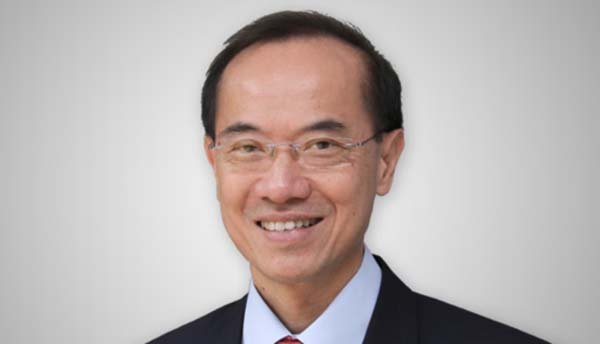
New Delhi, March 12 (UNI) Singapore’s former Foreign Affairs Minister George Yeo Yong-Boon has called for stronger cooperation between India and China, warning that adversarial relations between the two Asian giants would destabilise the wider region, while a stable partnership could strengthen peace and development across Asia.
Yeo, who is attending the ongoing 10th Synergia Conclave in the national capital, said the relationship between India and China should not be viewed as inherently hostile despite existing disputes.
“Speakers today describe the relationship as adversarial. Why should it be adversarial? There’s a border problem,” he said, adding that the boundary issue stems from historical complexities between the British colonial administration and the Qing dynasty.
“The source of the border problem is that between the British Raj and the Qing Dynasty, there was never any border delimitation,” he said.
Yeo stressed that disputes between the two neighbours would eventually be resolved through dialogue, citing examples of other border settlements in the region.
“So okay, you’ve got to discuss how in Ladakh, in the high Himalayas, in Arunachal Pradesh, how to draw the line. Eventually, it will be drawn. Just as you settled your boundaries with Bangladesh, just as China has settled its boundaries with Russia,” he said.
He also rejected the idea of inherent rivalry between the two civilisational powers. “Historically, between India and China, there is no natural antagonism,” he said. “If you strengthen the India-China pillar, the structure holds.”
According to Yeo, stable relations between the two countries are vital for the security and prosperity of Southeast Asia, including Singapore.
“If India and China have normal relations, Southeast Asia will be safe. But if India and China come to blows, for whatever reason, our lives will be very unsettled,” he said.
Drawing a metaphor to illustrate the anxiety felt across Asia during tensions between the two nations, he said, “When India and China quarrel, it’s like father and mother quarrelling. All of us feel very anxious, very tense.”
Yeo also highlighted the deep historical and cultural ties between the two countries.
“Apart from the 1962 war, it was from India that Buddhism went to China. And all Chinese know that,” he said, referring to the spread of Buddhism from India to China centuries ago.
At the same time, he noted that mutual understanding between the two societies remains limited.“It is a great pity, because there’s so little knowledge about China in India,” he said. “And equally, if you ask the Chinese where is Andhra Pradesh or Madhya Pradesh, they say, ‘huh?’ This is wrong.”
Looking ahead, Yeo predicted that both countries would dominate the global economic landscape by mid-century.
“By 2050, China will be the world’s biggest economy by far. India by that time will be the second biggest,” he said, noting that together they represent around 40 per cent of the global population.
He urged India to maintain strategic discipline and focus on economic growth rather than geopolitical rivalry. “The key to all this is don’t get involved in geopolitical struggles and strengthen that critical pillar, which is the India-China link,” he said.
Yeo added that stronger cooperation between India and China could also contribute to stability in regions such as Southeast Asia, Central Asia and the Middle East.
“If it’s strong, your relationship with ASEAN will improve. You and China can help stabilise the Middle East and bring development to all of Africa,” he said.
Referring to tensions in the Taiwan Strait, Yeo said the situation in East Asia remains stable despite geopolitical rivalry.
“So if you were Taiwan and you were China, what conclusion do you draw from that? East Asia is in fact stable,” he said. “I’m not saying that accidents can happen, but it is stable because the Americans know there will only be war in Taiwan if they move to the red line. China has drawn a very clear red line.”
He also warned that any conflict over Taiwan could have major global economic consequences, particularly for the semiconductor industry dominated by Taiwan’s chip manufacturing sector.
“And if there’s war over Taiwan, TSMC will be destroyed. There will be no immediate chips,” he said, adding that such a scenario would severely impact global technology supply chains.