





Shahid K Abbas
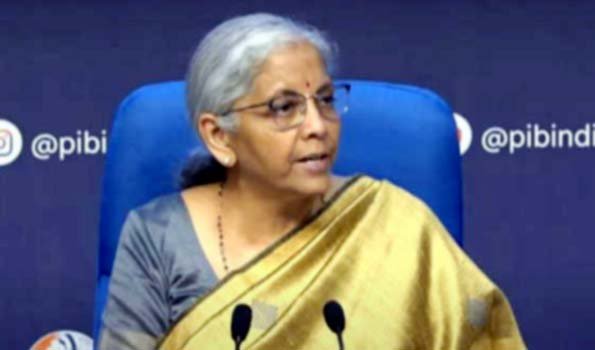
New Delhi, Jan 31 (UNI) As Finance Minister Nirmala Sitharaman prepares to present the union Budget on Sunday, February 1, expectations among households, businesses and state governments are converging around three broad themes: sustaining growth amid global uncertainty, easing pressure on middle-class finances, and reinforcing fiscal credibility at a time of shifting economic benchmarks.
This will be Sitharaman’s ninth consecutive Budget and the first of the 16th Finance Commission award period, giving it added significance. With India’s economy showing resilience but private consumption still uneven, the Budget is expected to strike a careful balance between fiscal prudence and targeted stimulus.
For salaried taxpayers, inflation-adjusted incomes and rising costs of housing, education and healthcare remain key concerns. Many expect rationalisation of income tax slabs, a higher standard deduction, or tweaks to exemptions under the new tax regime to boost disposable income.
“People are not necessarily looking for dramatic tax cuts, but for predictability and modest relief that keeps pace with the cost of living,” said a tax policy expert, adding that consumption-linked measures could have a multiplier effect on demand.
Any move on personal income tax is also being viewed politically, as the middle class has emerged as a crucial constituency ahead of upcoming state and national electoral cycles.
Employment generation, particularly for youth, is likely to be another focal point. Expectations are high for expanded incentives under skill development schemes, support for startups, and easier credit for micro, small and medium enterprises (MSMEs), which remain sensitive to interest rates and cash-flow constraints.
Industry bodies are also looking for clarity on production-linked incentive (PLI) schemes—whether they will be extended, recalibrated or consolidated to deepen India’s manufacturing base and improve export competitiveness.
Capital expenditure has been the backbone of recent Budgets, driving infrastructure creation in roads, railways, ports and urban transport. Analysts expect the government to maintain this thrust, though possibly at a more calibrated pace.
“The challenge for the Finance Minister will be to keep public capex strong without compromising the fiscal consolidation path,” an economist said, pointing to the government’s medium-term target of lowering the fiscal deficit.
With several Budget numbers expressed as a percentage of GDP, credibility of projections will matter, especially as revisions to GDP and inflation series are on the horizon later in February. Markets are expected to closely scrutinise assumptions underlying revenue growth and subsidy estimates.
State governments will be watching closely for signals on tax devolution and grants following the implementation of the 16th Finance Commission’s recommendations. Expectations include greater predictability in transfers and continued support for states undertaking infrastructure and social sector spending.
Any deviation from cooperative federalism could become a point of political contention, particularly for opposition-ruled states already vocal about resource constraints.
Climate-linked spending and green infrastructure are also expected to feature prominently, with possible incentives for renewable energy, electric mobility and sustainable urban development. At the same time, continuity in key welfare schemes—food security, housing and rural employment—is seen as essential to protect vulnerable sections amid uneven recovery.
Ultimately, public expectations from Budget 2026 go beyond headline announcements. There is a growing demand for coherence between policy intent, macroeconomic data and execution.
As Sitharaman rises to present the Budget on February 1, the test will be whether it reassures citizens and investors alike that India can combine growth, equity and stability—even as economic goalposts themselves are set to change in the weeks ahead.