





New Delhi, Mar 22 (UNI) The government on Sunday said the supply of domestic LPG cylinders remains stable across the country with “panic bookings” witnessing a decline, even as it stepped up measures to manage energy security amid the evolving situation in West Asia.
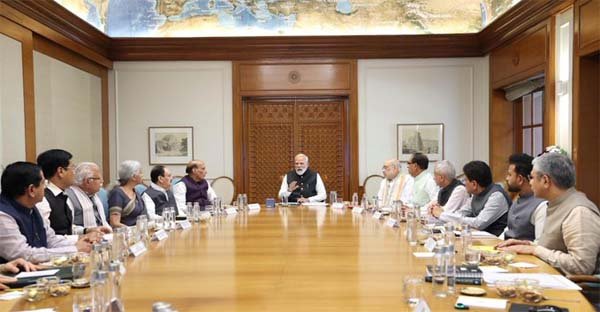
The government said it has taken a series of coordinated measures to ensure the uninterrupted availability of petroleum products and LPG across the country in view of the closure of the Strait of Hormuz, asserting that the overall energy supply situation remains stable despite global uncertainties.
In a detailed statement, the Ministry of Petroleum and Natural Gas said all refineries are operating at high capacity with adequate crude inventories, while domestic LPG production has been maximised to meet demand.
It also reassured that sufficient stocks of petrol and diesel are being maintained and that “no cases of fuel dry outs have been reported” at retail outlets, urging citizens to avoid panic buying as supplies continue to be maintained regularly.
The Ministry said natural gas supplies have been carefully managed to protect priority sectors, with 100 per cent supply being ensured for domestic PNG consumers and CNG transport, while industrial and commercial users connected to the grid are receiving about 80 per cent of their average consumption.
To address pressure on commercial LPG, city gas distribution (CGD) entities have been directed to prioritise PNG connections for establishments such as restaurants, hotels, and canteens. Companies, including IGL, MGL, GAIL Gas, and BPCL, have rolled out incentives to encourage both domestic and commercial consumers to switch to PNG, while regulators have mandated faster processing of applications and reduced timelines for supply connections.
The Centre has also asked states and union Territories to expedite approvals for CGD network expansion and offered additional commercial LPG allocation linked to progress in PNG adoption.
On LPG supply, the Ministry acknowledged that the situation remains sensitive due to the prevailing geopolitical developments, but said domestic supply continues without disruption. It noted that there have been “no reported dry-out at LPG distributorships,” with deliveries proceeding normally and most transactions being carried out through delivery authentication codes. It added that “panic bookings have reduced,” indicating improved public confidence in supply stability.
To support commercial consumers, the government has progressively increased LPG allocations, raising total supply to 50 per cent. This includes additional allocations aimed at supporting sectors such as restaurants, dhabas, hotels, industrial canteens, food processing units, and community kitchens.
Educational institutions and hospitals have been given top priority, with nearly half of the total commercial LPG allocation being directed towards these sectors to ensure continuity of essential services. Around 15,440 metric tonnes of commercial LPG have been lifted by states and commercial entities over the past eight days, reflecting improved distribution following the revised allocations.
As part of demand management, the government has also enhanced the supply of alternative fuels. An additional allocation of 48,000 kilolitres of kerosene has been made to states and union Territories over and above regular quotas, with instructions to identify district-level distribution points.
While several states have already issued allocation orders, others have been urged to expedite the process. In parallel, the Ministry of Coal has been directed to increase coal supply to states for distribution among small and medium consumers to ease pressure on LPG demand.
The Centre has placed significant responsibility on state governments for monitoring and regulating the supply of essential commodities under the Essential Commodities Act. States have been advised to maintain strict vigilance against hoarding, black marketing, and diversion of domestic LPG, and to take stringent action against violators under relevant laws.
Enforcement action has been intensified across the country, with the Ministry stating that “raids continue to be carried out” to curb hoarding and black marketing. Around 3,500 raids were conducted recently, leading to the seizure of more than 1,200 cylinders in states including Bihar, Haryana, Karnataka, Tamil Nadu and Uttar Pradesh.
In addition, public sector oil marketing companies have carried out surprise inspections at over 1,800 retail outlets and LPG distributorships to ensure smooth supply and compliance with regulations.
The government has also introduced several rationalisation measures to balance supply and demand, including increasing the LPG booking interval to 25 days in urban areas and up to 45 days in rural areas.
On the maritime front, the Ministry of Ports, Shipping, and Waterways is closely monitoring shipping movements and ensuring the safety of Indian seafarers, while maintaining continuity of trade.
The government said all Indian seafarers in the region are safe and that no incident involving Indian-flagged vessels has been reported in the past 24 hours. At present, 22 Indian-flagged vessels with 611 seafarers are operating in the western Persian Gulf under close surveillance.
A 24×7 DG Shipping control room remains active, having handled thousands of calls and emails, while over 547 Indian seafarers have been repatriated so far. It also confirmed that “port operations across India remain normal with no congestion,” ensuring smooth logistics and supply chains.
The government further said it is closely monitoring developments in the Gulf and West Asia region, with the Ministry of External Affairs coordinating efforts to ensure the safety and welfare of Indian nationals.
Indian missions are functioning round the clock, maintaining contact with the community, issuing advisories, and facilitating travel amid disruptions. Since February 28, over 3.5 lakh passengers have returned to India from the region, with special flight arrangements being made through alternative routes due to airspace restrictions in certain countries.
The Ministry noted that while six Indian nationals have lost their lives and one remains missing, efforts are underway to assist affected families and ensure early repatriation.