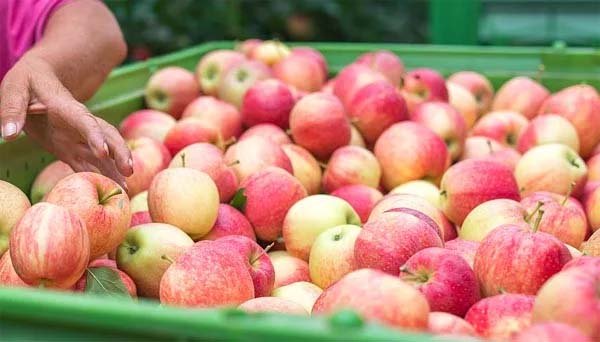






Shimla, Jan 30 (UNI) The Free Trade Agreement (FTA) with the European Union, being celebrated by the Modi government as the “Mother of All Deals” (MoAD), may instead turn into a “Mother of Apple Imports” (MoAI) for nearly 2.5 lakh apple growers in Himachal Pradesh, growers’ bodies have warned.
Reacting to the agreement signed between India and the European union on January 27, Himachal Pradesh Apple Growers’ Association president Rakesh Singha termed the deal as being against the interests of Indian apple growers.
“A Free Trade Agreement has been signed between the Indian government and the European Union, under which the import duty on EU apples has been reduced from 50 per cent to 20 per cent. This has created a serious crisis for Himachal’s Rs 55-billion apple industry, as well as for growers in Jammu and Kashmir and Uttarakhand,” the association said in a statement.
Lokendra Bisht, president of the Progressive Growers Association, said the agreement posed a major threat to Himachal’s apple economy. “Foreign apples will flood Indian markets, and Himachali apples will fail to fetch remunerative prices,” he said.
Congress MLA from Theog, Kuldeep Singh Rathore, said the Centre was determined to destroy Himachal’s apple industry.
“Earlier, the government reduced import duty on New Zealand apples, and now the same has been done for EU apples. BJP leaders from Himachal must raise this issue with the Centre, or the livelihoods of over 2.5 lakh families will be at risk,” he said.
Rathore pointed out that a month ago, the Modi government reduced import duty on New Zealand apples from 50 per cent to 25 per cent, and has now extended similar concessions to apples from 27 EU countries. Though the agreement is scheduled to come into effect in 2027, its implications have already alarmed growers.
Under the agreement, imports of apples from the EU would initially be capped at 50,000 tonnes and gradually increased to 100,000 tonnes annually over the next 10 years. These apples would attract a duty of 20 per cent, with a minimum import price (MIP) fixed at Rs 80 per kg.
Currently, Apple imports into India attract a 50 per cent duty. In 2024, India imported about 5.19 lakh tonnes of apples, of which 1.33 lakh tonnes (26 per cent) came from Iran, 1.16 lakh tonnes (23 per cent) from Turkey, and 42,716 tonnes (8.2 per cent) from Afghanistan.
The European union accounted for around 56,717 tonnes (11.3 per cent) of imports, a figure expected to rise sharply following the duty reduction. Growers fear that FTAs with New Zealand and the EU would flood Indian markets with cheaper apples. Last week, apple growers staged protests outside the Himachal Pradesh secretariat over the issue.
Orchardists have expressed widespread anger against the Modi government, recalling that Prime Minister Narendra Modi had promised at a 2014 rally in Sujanpur, Hamirpur district, to increase apple import duty from 50 per cent to 100 per cent.
“Instead of increasing the duty, the government is steadily reducing it,” growers said.
They further warned that under the New Zealand-EU agreements, other apple-exporting countries may also press for similar concessions, worsening the situation for domestic producers. Himachal Pradesh currently produces 7-8 metric tonnes of apples per hectare, compared to 60-70 metric tonnes per hectare in New Zealand. Countries such as China, the US, and Iran produce between 40 and 70 metric tonnes per hectare due to favourable conditions.
Given Himachal’s difficult terrain, the cost of apple production is around Rs 27 per kg. Growers say they can make profits only if apples sell at Rs 50–100 per kg, a prospect that appears bleak amid rising imports.
FTA hailed as ‘MoAD’ may turn into ‘MoAI’ for Himachal apple growers