






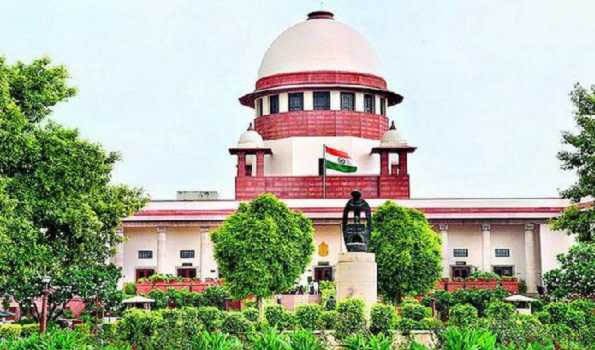
New Delhi, Jan 5 (UNI) The Supreme Court on Monday expressed serious concern that trial court judges across the country are increasingly reluctant to grant bail, not because cases lack merit, but due to a persistent fear of facing departmental or disciplinary action.
A Bench comprising Justice J.B. Pardiwala and Justice K.V. Vishwanathan cautioned that this climate of fear is eroding judicial independence at the district level and is directly contributing to an excessive number of bail applications reaching High Courts and the Supreme Court.
The Bench observed that the initiation of disciplinary proceedings against judicial officers merely on suspicion, or for an alleged improper exercise of discretion, has created hesitation among trial judges to grant bail even in cases where the law clearly permits it.
The Court warned that such an approach discourages judges from performing their core judicial function freely and independently. “These fears should not influence judicial decision-making. If trial judges begin declining bail in deserving cases due to apprehension of administrative action, the entire justice delivery system suffers,” the Court noted, adding that this is one of the key reasons higher courts are burdened with bail matters.
The observations were made while setting aside the dismissal of a judicial officer from Madhya Pradesh, who had been removed from service on allegations of corruption and adopting inconsistent standards while deciding bail applications under the Madhya Pradesh Excise Act.
In a concurring opinion, Justice Pardiwala emphasised that a mere incorrect order or an erroneous exercise of discretion in granting bail cannot, by itself, justify disciplinary action against a judicial officer. Highlighting the constitutional importance of an independent district judiciary, Justice Pardiwala said trial courts exercise powers that are fundamental to the functioning of India’s justice system. When their autonomy is compromised and fear replaces judicial independence, the rule of law and democratic values are weakened.
The Court further remarked that over time, trial judges have shown a growing tendency to avoid exercising discretion in bail matters, which undermines their role as the first line of judicial scrutiny in criminal cases. Calling upon High Courts, which exercise supervisory control over the subordinate judiciary, the Supreme Court urged them to ensure that judicial officers are not subjected to departmental inquiries solely because an order is later perceived to be incorrect.
It emphasised that judges must be allowed to dispense justice fearlessly and without undue pressure, in line with the fundamental principles of judicial independence.