



Shantanu Mukharji
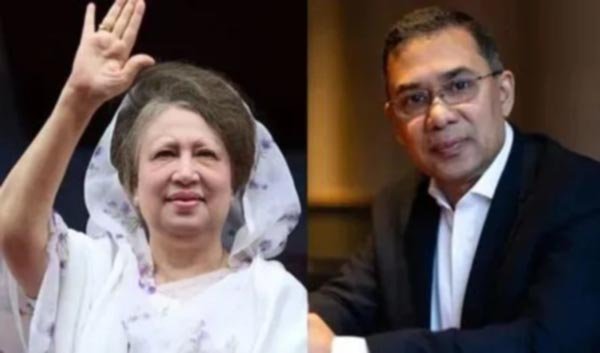
A prominent figure in Bangladesh’s politics for more than forty years, Begum Khaleda Zia rose from an ordinary housewife’s life to become the country’s first woman Prime Minister and one of the most influential leaders in South Asia’s post-independence history.
Her political career was moulded by military rule, mass movements, electoral politics and prolonged legal and political standoffs. Only a matriculate, while in her college years, she married then Pakistan Army officer Ziaur Rahman in 1960. During the Liberation War in 1971, she initially went into hiding.
On July 2, in 1971, Pakistani forces had detained Khaleda Zia and her two sons from a house in Dhaka and imprisoned them at the Dhaka Cantonment. She remained in captivity till December 15, just before Bangladesh became independent.
Following Ziaur Rahman’s assassination in 1981, on the exhortation of senior BNP leaders and activists, she assumed a leadership role in the party. With no prior political experience, she accepted the challenge and soon emerged as a key figure in opposition politics.
She led the formation of a seven-party alliance and launched a sustained movement against the Gen Hussein Mohammad Ershad’s military rule. The agitation continued in phases until 1986 and later intensified into a one-point movement demanding the resignation of Ershad.
The movement and Khaleda Zia’s uncompromising stance against the regime, ultimately contributed to the fall of Ershad and paved the way for the restoration of parliamentary democracy.
Khaleda Zia became Prime Minister for the first time in 1991 after the BNP won the parliamentary elections, marking the return of a democratic governance. She was re-elected briefly on February 15, 1996, and later returned to power for a third term in 2001 through a coalition government. She had contested 23 parliamentary seats across five general elections and won all of them, a record often cited as unique in Bangladesh’s electoral history.
Now, what are the immediate political and other implications for Bangladesh in the aftermath of Khaleda’s demise?
According to Bangladesh watchers and geo-political analysts, her passing away is likely to see a huge sympathy wave for the BNP in the forthcoming elections scheduled on February 12, 2026.
Everyone noticed the tumultuous welcome accorded to Khaleda’s son and acting chairman of the party, Tarique Rahman when he landed in Dhaka on December 25 after 17 years of exile in London.
Both these factors, the death and Tarique’s arrival, are expected to add to the electoral prospects of BNP.
This is also likely to dissipate, to a large extent, the chances of Jamaat’s improved performance in the elections.
In other words, there may be a clean sweep for the BNP. Tarique Rahman and the BNP rank and file will leave no stones unturned in their election campaign to capitalise on Khaleda’s demise to ensure an outright victory.
This may also see further alienation of the Awami League (AL) which already seems to be on the margins after Hasina’s unceremonious exit from Bangladesh in August last year. However, it would be too early to write an epitaph for any political party in Bangladesh.
Assuming BNP returns to power in the election, then Tarique Rahman is the only prospective “Prime Ministerial hopeful” and after being in oblivion for nearly two decades, he will like to make up for his absence by asserting and rewriting the role of his slain father Ziaur Rahman and his mother’s premiership for two spells thus deifying her.
While asserting his father’s role in the liberation struggle, Tarique and his cohorts will possibly try to play with history by highlighting his father’s role in the freedom struggle in a more pronounced manner carving a permanent place in the history which seemed dimming in the last nearly twenty years.
With the renewed glorification of Ziaur Rahman and Khaleda in redefining history of Bangladesh, other pro-liberation heroes and martyrs may gradually fade. Or that would be what the BNP would reckon for.
However, Tareque’s and BNP’s priority should be first to restore the fraught law and order situation, boosting the sagging morale of the uniformed personnel, and most importantly, ensuring full protection to the minorities and their places of worship which stand threatened by the “free for all” unleashing of terror by religious extremists.
Tarique will also do well to highlight these priorities in his canvassing speeches to instill confidence amongst the people in general who have been living under a grave sense of insecurity ever since the interim government is at the helm for the last well over a year.
(Writer, is a retired IPS officer, Adviser NatStrat, and a former National Security Advisor in Mauritius)