





By Special Correspondent
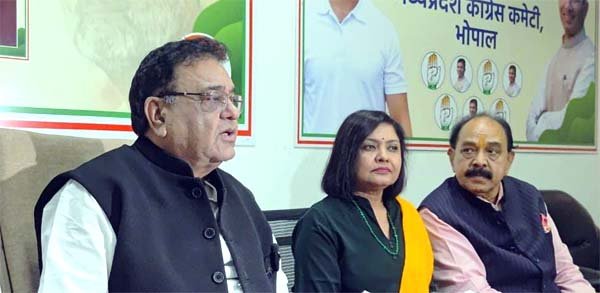
Bhopal: Madhya Pradesh Congress media in-charge Dr Mukesh Nayak on Tuesday strongly condemned the new labour codes enforced by the Central Government from 22 November 2025, calling them a “grave assault on workers’ hard-earned rights”. Addressing a press briefing at the Pradesh Congress Committee headquarters, Dr Nayak said the four new codescreated by subsuming 29 existing labour laws had been imposed under the guise of “ease of doing business”, but in reality pushed workers into a new era of insecurity, instability and exploitation.
He said the codes violated the core constitutional values of equality, justice and dignity, and reiterated that the Congress Party remained firmly committed to safeguarding the interests of the working class. The party, he added, demanded their immediate withdrawal. Senior Congress leaders including MPCC general secretary Anuma Acharya, spokesperson Bhupendra Gupta, Ravi Saxena and Vikram Choudhary were present.
Following the President’s assent, the Industrial Relations Code 2020, the Occupational Safety, Health and Working Conditions Code 2020, and the Social Security Code 2020 have now become law. The Wage Code 2019 had already been enacted earlier. Dr Nayak said the Ministry of Labour had announced implementation of all four codes from April 2021, under which 29 Central labour laws would automatically cease to exist.
He alleged that the codes severely weakened workers’ rights. Citing an example, he noted that Section 13 of the Wage Code empowered the government to fix working hours even after minimum wages were determined meaning the “normal working day” could legally be extended to 10 or 12 hours. Although the Occupational Safety Code limits the workday to eight hours, the provision for overtime remained vague and left entirely to the discretion of the government, giving employers unchecked freedom to extend working hours.
He reminded that the eight-hour workday was rooted in the historic May Day movement and that Dr B.R. Ambedkar had ensured its implementation in India. The labour codes, he argued, rolled back gains achieved over generations, making it necessary to revisit history to resist “the anti-worker onslaught of corporate forces and the government”.
Dr Nayak further criticised provisions that curtailed the powers of labour inspectors, replacing inspections with a “facilitator” model and legitimising self-certification by employers. He warned that the new adjudication system, which diluted independent labour courts and concentrated authority in administrative tribunals, opened the door to executive interference in justice.
He highlighted concerns regarding the exclusion of supervisors earning above Rs 18,000 a month from the definition of ‘worker’, the legitimisation of fixed-term employment, the restrictions on trade unions, stringent limitations on strikes, changes in the definition of factories and dilution of safety standards. These changes, he said, amounted to “hire and fire at will”, undermining job security for millions.
Concluding, Dr Nayak said, “The new labour codes are a direct attack on workers and violate the basic spirit of the Constitution. The Congress Party stands firmly with the working class and demands that these codes be withdrawn immediately.”