





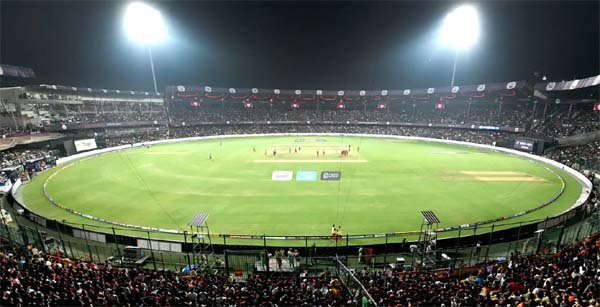
Belagavi, Dec 10 (UNI) As Karnataka prepares for a crucial Cabinet discussion on the future of cricket at Bengaluru’s historic M Chinnaswamy Stadium, the debate is rapidly intensifying over a contentious question: Should the government permit matches before a full, independently verified safety overhaul is completed?
The issue has taken centre stage ever since the June 4 stampede that claimed 11 lives and left hundreds injured during celebrations of Royal Challengers Bengaluru’s maiden IPL victory.
Nearly six months later, the stadium gates remain shut, its once-familiar buzz replaced by lingering questions about accountability, preparedness and public safety.
On Wednesday, Deputy Chief Minister DK Shivakumar reiterated that the government had “no intention of stopping cricket,” but emphasised that crowd-management measures and the Justice Michael D’Cunha Committee recommendations must be examined carefully.
While meeting newly elected KSCA President Venkatesh Prasad, he signalled willingness to work with cricket administrators. Yet, within the government, discussions are far from straightforward.
The demand to reopen the stadium has come not only from cricket fans eager for the return of live matches but also from KSCA officials who argue that the city cannot afford to lose marquee fixtures, especially the IPL.
Bengaluru’s economy, they say, benefits immensely from the cricketing season, from hospitality to retail and transport sectors.
However, voices from the other side of the debate insist that the emotional and financial costs of another safety lapse would be far greater.
Safety experts point out that merely implementing crowd-management guidelines or issuing advisories is not enough. They argue that an independent, third-party structural and safety audit must be completed, not partially, not in phases, before Chinnaswamy is allowed to host even a domestic fixture.
For them, the tragedy of June 4 is a stark reminder of how quickly celebrations can turn into chaos when planning falls short.
Families of the victims, too, have urged the government to avoid what they fear could be a rushed decision influenced by commercial considerations. “We lost our children because the system failed,” said one family member recently. “What is the hurry to open the stadium? Why not first ensure that every recommendation is implemented fully?”
Within cricketing circles, there is quiet acknowledgment that reopening the stadium too soon could risk not just public safety but also reputational damage for Bengaluru. Any misstep would invite national criticism, questions from the BCCI, and possibly a shift of major matches to other cities — the very outcome KSCA wants to avoid.
Political observers note that the government is caught between two competing pressures: the expectation that Bengaluru should remain a premier cricketing venue, and the responsibility to ensure that safety is not compromised for the sake of sentiment or revenue.
The upcoming Cabinet meeting is expected to reflect this tension, with ministers weighing the implications of both action and delay.
For now, the debate continues to deepen, and the answer to the central question remains uncertain. Will the government prioritise a full, independently verified safety overhaul before allowing matches to resume? Or will it greenlight events with preliminary measures in place, betting on improved protocols and tighter coordination?
The decision, whenever it is taken, will shape not only the future of Chinnaswamy Stadium but also public confidence in largescale event management in Karnataka. In the shadow of the June tragedy, the stakes could not be higher.