






P Krishna Kumar
New Delhi, Mar 10 (UNI) Australian exports to India have recorded a growth of around 16 per cent in the last two years since the implementation of the Economic Cooperation and Trade Agreement (ECTA), with strong momentum expected to continue as businesses from both countries deepen engagement, said Todd Miller, Trade & Investment Commissioner for India, Australian Trade and Investment Commission (Austrade).
Speaking to UNI on the sidelines of Aahar 2026, Miller said the trade pact has significantly improved market access and interest among exporters. “The growth has been about 16 per cent across the board,” Miller said, noting that Australian merchandise exports to India as per November, 2025. stood at about 7.1 billion Australian dollars, while total exports are higher.
He said the agreement has given Australian companies an early advantage in the Indian market. “We effectively have a two-year head start and that has created strong momentum,” he said, when asked about the upcoming competition as India finalised free trade agreements with multiple countries and regional groups like EU in the last couple of months.
Miller noted that the agreement has already led to significant gains in several agricultural commodities. Among the standout performers has been chickpeas, lambs, cotton, etc, he said. “Exports of chickpeas into India have reached about 1.2 billion Australian dollars, showing over 1,000 per cent growth,” he said.
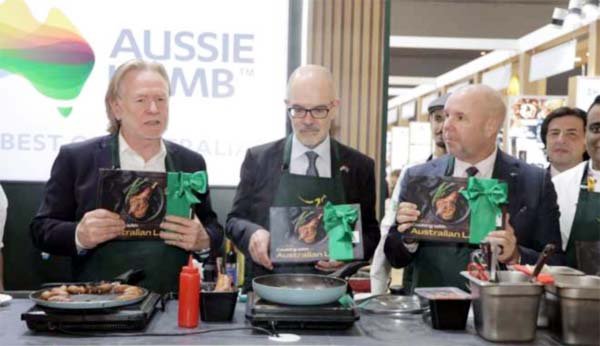
Australian lamb has also gained ground in the Indian market following the trade agreement. “Australian lamb is now the number one imported meat into India,” he said.
According to Miller, the agreement has not only improved competitiveness but also triggered greater business engagement between the two countries.
“Australian companies and Australian tourists and everybody wants to explore and understand more about India. ECTA has literally taken Australia-India relationship beyond cricket,” he said. At the ongoing expo, around 44 Australian companies are showcasing their products, with many participating for the first time. “Quite a percentage of them are here for the first time to see what opportunities exist in India,” he said.
Despite rising competition, he expressed confidence that the early momentum generated by the agreement and many success stories in the market and growing interest from Indian importers would continue to support expansion of Australian food and agricultural exports in the Indian market.
As a trade body which does a lot of advocacy and hand-holding for businesses, Miller said that penetrating the India consumer market through e-commerce and q-Commerce channels would be a major opportunity for Australian companies to reach out faster to the consumer market in India.