





Vivek Shukla
New Delhi, March 14 (UNI) In the twilight of Ramzan, two legendary streets, one cradled by Mughal minarets in Old Delhi, the other at Mumbai’s Mohammad Ali Road.
More than a thousand kilometres separate the lanes around Jama Masjid from Mohammad Ali Road, yet the air carries an identical promise: the fast will break, hunger will yield to gratitude, and strangers will become kin under strings of fairy lights.
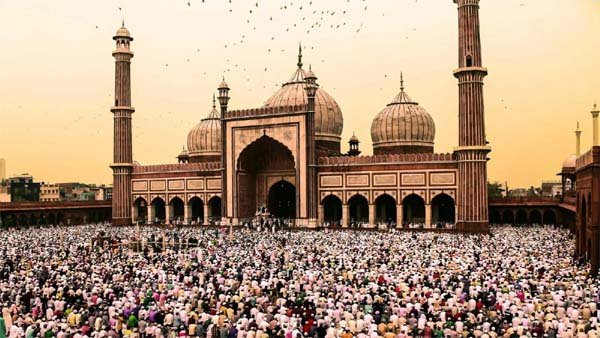
Wander into the narrow galis near Jama Masjid as the call to Maghrib prayer fades, and the scene feels timeless. The grand red sandstone mosque looms above, its domes and minarets bathed in soft floodlight, holding centuries of whispered supplications.
Families claim patches on the wide steps, spreading cotton sheets and unpacking modest iftar treasures: plump dates, chilled rose sherbet in plastic bottles, golden pakoras still sizzling from the fryer, and bowls of vibrant fruit chaat dusted with chaat masala. Vendors thread through the crowds like gentle currents, balancing trays of sliced watermelon, boiled chana laced with onions and lemon, and crisp samosas whose steam curls into the evening.
A few steps away, the real feast ignites. Seekh kebabs hiss over live charcoal, fat dripping and sparking; shami kebabs fry to a perfect crust; enormous deghs bubble with nihari, its marrow-rich broth perfuming the air. Nearby stalls ladle out steaming biryani layered with saffron-kissed rice and tender mutton, while tandoors roar as rotis puff and char. The aromas, smoky meat, frying ghee, roasted spices, blend with drifting notes of ittar and incense, wrapping the chaos in something almost holy.
Avid traveller Tshetan Wangmo Norbhu, who visited with friends one Ramzan evening, still recalls the quiet magic before the azan ended. “As twilight deepens, the illuminated mosque looks majestic,” she says. “Its towering minarets and vast courtyard seem to hold centuries of prayers within their walls.” In that suspended moment, the steps fill with people of every background, locals in kurtas, tourists clutching cameras, families from distant states, united by the shared wait for the first bite.
Across the country, Mohammad Ali Road erupts into a dazzling carnival at the same hour. Neon signs flare to life, fairy lights zigzag overhead, turning the narrow stretch into a glittering tunnel. The crowd here is louder, more polyphonic: Marathi banter mixes with Gujarati exclamations, Konkani phrases weave through Hindustani calls, creating a lively chorus absent in the more uniformly Urdu-inflected lanes of Old Delhi. Women move freely through the throng, their presence adding a visible layer of openness that makes Mumbai distinct.
Near Minara Masjid, daily iftar gatherings draw hundreds. Across the road, young restaurateur Abdul Rahman—once a chartered accountant,oversees Mashaallah Cuisines amid a constant rush. “Mohammad Ali Road is not just about non-vegetarian delicacies,” he insists between greeting customers. “You can find some of the best mithai here too. People travel from across India just for the atmosphere and the food.”
His words prove true with every step. Stalls brim with syrup-drenched malpuas, creamy rabdi, phirni scented with cardamom and served in earthen kulhads, and towering stacks of golden fried chicken. Kebab skewers turn slowly over coals, sparks dancing upward; massive cauldrons of haleem release a slow, seductive aroma of lentils, meat, and spice. The street feels intimate—people perch on stools at shared tables or stand elbow-to-elbow at counters, trading recommendations and stories between bites.
Mohammad Wajihuddin, author and senior Mumbai based journalist, has been visiting Mohammad Ali Road for the last several years. “Bollywood actors, college students, families, food lovers—they all come,” he observes. “Many wait all year for this Ramzan month. Beyond food, people shop for Eid clothes, turning the nights into a full celebration.”
Yet beneath the sensory overload lies the same quiet warmth that defines Jama Masjid evenings. Strangers pass plates, stall owners call regulars by name, and laughter rises over the clatter of spoons. Mumbai’s relentless energy softens here, revealing its generous soul.
Delhi and Mumbai may differ in cadence, Old Delhi’s Mughal serenity versus Mumbai’s exuberant intimacy—but Ramzan binds them. At Jama Masjid, faith unfolds beneath soaring architecture; on Mohammad Ali Road, the community celebrates through shared abundance. Both places remind us that sunset during the holy month is more than an end to hunger. It is the moment gratitude arrives, plates are passed, and entire neighbourhoods fold into one extended family.
As Mumbai-based social worker M. Zaid Khan puts it, “For a few luminous hours each night, these streets stop being just streets. They become home.”