





By Parwinder Sandhu
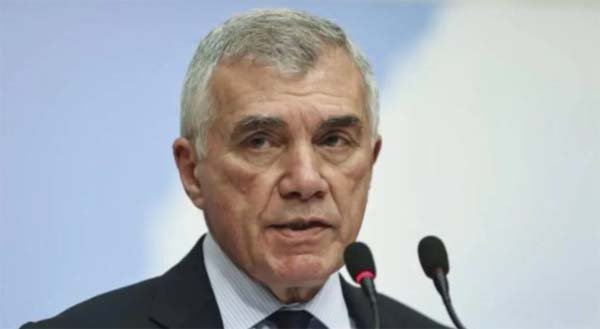
New Delhi, Mar 12 (UNI) Turkish diplomat Ahmet Unal Cevikoz said on Thursday that Asia’s future stability will depend largely on effective diplomacy and the ability of regional and global powers to manage strategic rivalry without allowing it to escalate into conflict.
Speaking at the 10th Synergia Conclave in the national capital, Cevikoz said Asia today stands at the centre of global economic growth as well as geopolitical transformation.
“I think I should probably start with a very simple observation. Asia today is both the engine of global growth and the epicentre of geopolitical change,” he said.
“Nowhere else in the world do we see such a concentration of economic dynamism, technological innovation, demographic weight and strategic competition.”
Cevikoz noted that this combination offers both opportunities and risks for the region, stressing that the key challenge for policymakers is managing rivalry through diplomacy.
“For diplomats and policy makers, the question, therefore, is not whether rivalry exists in Asia. Rivalry is a normal feature of international politics,” he said. “But the real question is whether diplomacy can ensure that rivalry remains manageable rather than escalating.”
The Turkish diplomat said regional stability in Asia had historically rested on three major pillars: the strategic presence of the United States, economic interdependence led by China’s integration into global markets, and multilateral diplomacy through institutions led by the Association of Southeast Asian Nations.
He, however, warned that these pillars are now under pressure amid intensifying geopolitical competition. “Strategic competition between major powers is intensifying. Economic interdependence is increasingly shaped by technological rivalry, supply chain diversification and economic security concerns,” he said.
At the same time, he noted that traditional institutions are struggling to adapt to a more fragmented geopolitical environment. Cevikoz said the region is witnessing the emergence of a more flexible diplomatic architecture with new forms of cooperation such as strategic partnerships and issue-based coalitions.
“Traditional regional institutions remain important. At the same time, new forms of cooperation are emerging through issue-based coalitions and strategic partnerships such as the Quad or AUKUS,” he said.
According to him, the evolving international system is gradually moving toward multipolarity, where several powers simultaneously influence regional dynamics. “In such a system, diplomacy becomes even more important because stability is no longer guaranteed by a single dominant power,” he said.
Looking ahead to 2035, Cevikoz outlined three possible scenarios for Asia’s future. The first, which he described as “competitive stability,” would see continued rivalry between major powers such as the United States and China but within predictable limits.
“Competition exists, but it remains predictable and manageable,” he said, stressing that maintaining communication channels and crisis-management mechanisms would be crucial.
The second scenario, “strategic fragmentation,” could result in rival technological, economic and security blocs emerging across the region.
“In such a scenario, Asia would not necessarily experience open conflict, but it would face persistent instability and heightened security dilemmas,” he said.
The third and more optimistic possibility, he said, would be “cooperative multipolarity,” where regional powers build flexible networks of cooperation instead of rigid alliances.
“In such a scenario, Asia could become not a battlefield for rivalry, but perhaps a laboratory for diplomatic innovation,” he said.
Highlighting the growing role of middle powers, Cevikoz said countries such as India, Japan and Australia are increasingly acting as connectors in the international system.
“In today’s international environment, middle powers are no longer merely observers of great power competition,” he said. “In many ways, middle powers function as the stabilisers of a multipolar order.”
He particularly emphasised India’s rising strategic importance in Asia’s evolving geopolitical landscape. “In this evolving Asian landscape, India occupies a particularly important position,” he said. “India’s longstanding commitment to strategic autonomy allows it to engage simultaneously with multiple partners across the international system.”
Cevikoz said India’s diplomatic approach is becoming increasingly relevant at a time when many countries seek balanced relationships rather than exclusive alliances.
“In that sense, India is not only adapting to the emerging international order, it is also helping to shape its norms and practices,” he said.
He also referred to the ancient Indian strategist Kautilya and his concept of the “Mandala Theory” of international relations. “More than 2,000 years ago, the Indian strategist Kautilya, through Arthashastra, described what he called the Mandala Theory of International Relations,” he said.
“According to this idea, states exist within a circle of neighbours and potential rivals, and stability emerges not from permanent alliances but from carefully managed balances of relationships.”
Concluding his remarks, Cevikoz stressed that the future of Asia will depend not only on power dynamics but also on the quality of diplomacy. “Competition among states is inevitable, but escalation is not,” he said. “If diplomacy remains active, creative and inclusive, Asia can continue to be the most dynamic region of the global economy.”