




Parwinder Sandhu
New Delhi, March 12 (UNI) The government has activated a range of alternate fuel measures and supply management mechanisms to ease pressure on LPG supplies amid the ongoing global energy disruption caused by the closure of commercial shipping through the Strait of Hormuz.
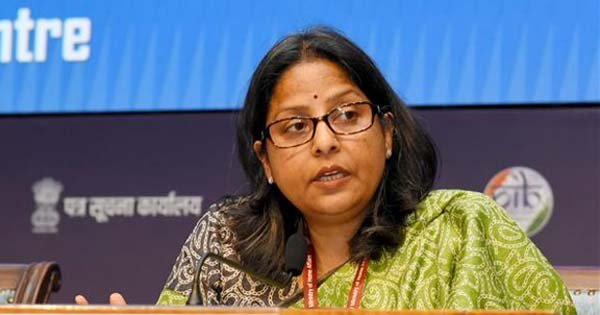
Addressing a press briefing, Sujata Sharma, Joint Secretary in the Ministry of Petroleum and Natural Gas, said the government is promoting alternate fuel options and increasing allocations of other energy sources to ensure that priority consumers continue to receive LPG.
“Alternate fuel options are being activated to ease pressure on LPG and gas channels,” Sharma said.
She said additional kerosene allocations have been released to state governments as part of the contingency plan. “Every quarter the Government of India allocates around one lakh kilolitre of kerosene to the states. Today, another 48,000 kilolitre has been released to the state governments,” she said, adding that states will play a crucial role in identifying beneficiaries and ensuring proper distribution.
The coal sector has also been mobilised to support small and medium consumers. “The Ministry of Coal has issued directions to Coal India Limited and Singareni to allot higher quantities of coal to states so that supplies can be made to small, medium and other consumers,” Sharma said.
To further reduce dependence on LPG in the short term, environmental authorities have temporarily permitted the use of alternate fuels for certain sectors. “The Ministry of Environment has advised state pollution control boards to permit, for the duration of this crisis period, the use of biomass, RDF pellets, kerosene or coal as alternate fuel for the hospitality and restaurant segments for one month,” she said, noting that the measure would help free up LPG for priority users.
Sharma also said the government has prioritised certain sectors for commercial LPG supply and set up a mechanism to regulate distribution.
“Hospitals and educational institutions have been prioritised for commercial LPG supply. For the rest of the consumers, a three-member committee of executive directors of the oil marketing companies has been formed,” she said.
She added that some commercial cylinders would also be released based on recommendations and with support from state governments. “State governments have been requested through the oil marketing companies to identify the list of beneficiaries so that commercial cylinders can be delivered on a priority basis and hoarding or black marketing can be avoided,” she said.
Despite the global disruption, Sharma said the government is working to ensure stable supply of domestic LPG to households.
“We import almost 60 per cent of our LPG and almost 90 per cent of that comes through the Strait of Hormuz, so it is a difficult situation. But the government is making all efforts to ensure that supply to the domestic consumers is ensured,” she said.
She noted that domestic LPG production has been increased after refineries were directed to maximise output under the Essential Commodities Act.
India’s LPG distribution network continues to function normally, she added. “We have almost 25,000 distributors throughout the country and we deliver almost 50 lakh cylinders on a daily basis. No dry-out has been reported,” she said.
However, she pointed out that the surge in bookings in some areas is largely driven by public anxiety. “There has been a manifold increase in booking because of panic. We urge citizens to avoid panic booking and conserve fuel wherever possible during this period of global uncertainty,” Sharma said.