






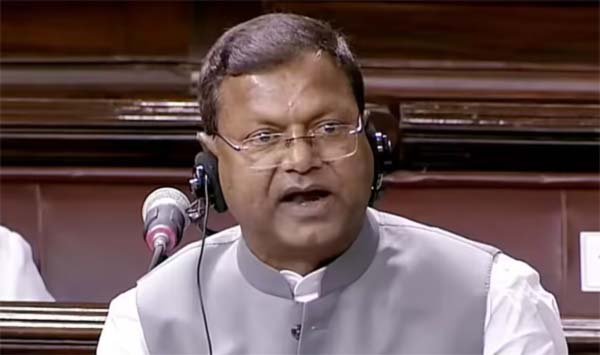
New Delhi, March 12 (UNI) India’s external debt stood at USD 746 billion at the end of September 2025, with key vulnerability indicators remaining comfortable and reflecting prudent management of external borrowings, the Lok Sabha was informed on Thursday.
In a written reply, Minister of State for Finance Pankaj Chaudhary said the government regularly monitors and reviews the size and composition of India’s external debt, including exposure to bilateral, multilateral and commercial creditors.
He said external debt statistics are compiled and released periodically through the quarterly external debt reports and annual status report on India’s external debt.
As per the quarterly external debt report released by Department of Economic Affairs on December 30, 2025 up to end-September 2025, India’s gross external debt stood at USD around USD 746 billion.
The composition of the debt includes USD 80,774 million in multilateral loans, USD 41,162 million in bilateral loans and USD 22,687 million owed to the International Monetary Fund. Trade credit accounted for USD 2,978 million, while commercial borrowings formed the largest component at USD 294,843 million.
Non-resident deposits stood at USD 165,799 million, rupee debt at USD 745 million, and short-term debt amounted to USD 137,000 million.
However, the Minister said the country’s external debt position continues to remain sustainable. As of end-September 2025, the external debt-to-GDP ratio was 19.2 per cent, while the ratio of foreign exchange reserves to total external debt stood at 93.8 per cent, indicating a strong reserve buffer.
He further said short-term debt (original maturity) constituted 18.4 per cent of the total external debt, while the debt service ratio declined from 6.6 per cent in 2024-25 to 6.0 per cent in 2025-26 up to September 2025.
Chaudhary said the government’s external debt management policy focuses on maintaining a prudent borrowing strategy, including close monitoring of long- and short-term debt, raising sovereign loans on concessional terms with longer maturities, maintaining diversified currency composition of external debt, regulating external commercial borrowings and rationalising interest rates on Non-Resident Indian deposits to ensure macroeconomic stability.