





Thiruvananthapuram, March 12 (UNI) Environmental groups and community representatives have unveiled a comprehensive policy framework titled “From Forest to Sea: Kerala People’s Environmental Charter,” urging political parties and policymakers to place ecology and climate resilience at the centre of development planning in Kerala.
The document, prepared by the Kerala Paristhithi Aikya Vedi, was the outcome of discussions held at the Sahyadri Environmental Summit 2026 in Wayanad from January 24 to 26. The charter was developed through consultations involving environmental organisations, researchers and community representatives from across the state.
The charter warns that Kerala is facing increasing ecological stress, reflected in frequent floods, landslides, coastal erosion, tidal flooding, rising heat stress, water pollution and biodiversity loss, senior journalist MJ Babu said.
According to the document, these crises are not isolated incidents but symptoms of deeper structural pressures on natural systems, worsened by climate change and development pathways that have weakened landscapes that once regulated water, soil and climate.
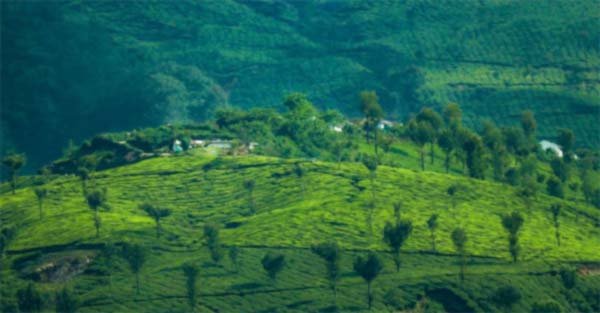
At the centre of the charter is the concept that Kerala functions as a connected “ridge-to-sea” ecological system, where rainfall originating in the forests and grasslands of the Western Ghats flows through hill slopes, midland regions, farms, rivers and wetlands before reaching the Arabian Sea.
The document emphasises that disruptions anywhere along this continuum—from forests to wetlands and coastal ecosystems—can destabilise the entire environmental system.
The charter therefore calls for a shift from reactive disaster management to preventive ecological governance, where scientific understanding of landscapes guides decisions in agriculture, infrastructure development, urban planning and public investment.
It proposes transforming agriculture into climate-resilient ecological infrastructure by promoting agroecology, expanding organic farming and protecting indigenous seeds.
The document also calls for reviving paddy landscapes and wetlands, which serve as natural flood buffers and support food security, along with diversification and ecological restoration of plantation landscapes.
The charter stresses the need to protect forests in the Western Ghats, which it describes as the ecological foundation of Kerala’s landscape.
It recommends identifying ecologically sensitive zones, restoring forest ecosystems, securing wildlife corridors and addressing human–wildlife conflict while safeguarding the rights and livelihoods of Adivasi and forest-dependent communities.
Concerns are also raised about increasing pressures on Kerala’s midland hills and laterite landscapes due to hill cutting, quarrying and unregulated construction.
The charter proposes stronger regulation of these activities, mapping and protection of springs and headwater streams, and conservation of traditional groundwater systems such as suranga wells.
The document calls for coordinated action to restore rivers and wetlands, which are under pressure from pollution, encroachment and sand mining. It also highlights the growing vulnerability of Kerala’s coastline to erosion, tidal flooding and sea-level rise, recommending coastal ecosystem restoration, mangrove conservation and stronger safeguards for fishing communities.
Infrastructure development, the charter notes, must account for Kerala’s monsoon-driven hydrology. It recommends mandatory hydrological and ecological screening of major projects and independent ecological safety audits of highways and large public works to ensure that natural drainage pathways are preserved.
Rapid urbanisation is also identified as a major driver of flood risks and heat stress. The charter proposes stronger urban tree protection measures, restoration of urban wetlands and drainage systems, and the development of heat action plans to build climate-resilient cities.
The policy document also addresses issues such as waste management, plastic pollution, tourism pressure and quarrying, while promoting renewable energy expansion, decentralised solar systems, energy efficiency and circular material use.
In addition to sectoral measures, the charter proposes major governance reforms, including the creation of a Kerala Climate Action and Resilience Mission, adoption of a state land-use policy based on ecological zoning, climate-tagged budgeting and a public environmental data dashboard to improve transparency and public oversight.
The charter further calls for legislation to support communities displaced by climate-related disasters such as floods, landslides and coastal erosion, including time-bound compensation, housing and livelihood restoration through a climate risk rehabilitation framework.
According to its authors, the People’s Environmental Charter is intended to serve as a science-based policy guide for political parties as they prepare governance programmes and election manifestos.
By linking forests, hills, rivers, wetlands and coastal ecosystems into a single governance framework, the charter argues that Kerala can strengthen ecological stability, reduce climate risks and protect livelihoods while ensuring that development proceeds within the limits of the natural systems that sustain the state.