





New Delhi, March 8 (UNI) Prime Minister Narendra Modi on Sunday inaugurated and laid the foundation stone of multiple development projects worth over Rs 33,500 crore in the national capital, including new metro corridors and major housing redevelopment works for government employees, saying the initiatives would strengthen infrastructure and improve the quality of life for residents.
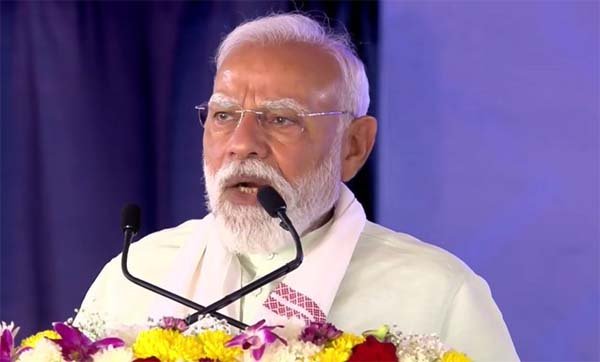
Addressing a gathering after the launch of the projects, Modi said the government remains committed to transforming the capital into a modern and developed city. “We are committed to building a modern and Viksit Delhi. The projects launched today will strengthen infrastructure, improve connectivity and enhance the ease of living for people of the city,” he said.
The prime minister emphasized that the progress of the capital carries significance beyond the city itself. “The development of Delhi is not just the growth of a single city; it is linked to the image of the entire country,” he said, adding that improved public infrastructure would benefit millions of residents.
A major component of the day’s announcements was the expansion of the Delhi Metro. Modi inaugurated two new corridors — the Majlis Park–Maujpur Babarpur (Pink Line) corridor spanning about 12.3 km and the Deepali Chowk–Majlis Park (Magenta Line) corridor covering about 9.9 km. According to officials, the new sections will enhance connectivity for several areas including Burari, Jagatpur-Wazirabad, Khajuri Khas, Bhajanpura, Yamuna Vihar, Madhuban Chowk, Haiderpur Badli Mor, Bhalaswa and Majlis Park.
“The new metro section inaugurated on Sunday will provide great convenience to millions of people in the capital,” Modi said. “Especially for the residents of East and North-East Delhi, daily travel will now become much easier than before.”
The prime minister also laid the foundation stone for three new metro corridors under Phase V-A covering about 16.1 km. The proposed routes include R.K. Ashram Marg to Indraprastha, Aerocity to Indira Gandhi Airport Terminal-1, and Tughlakabad to Kalindi Kunj, which are expected to improve connectivity between South Delhi, Noida and the airport.
Alongside metro expansion, Modi inaugurated and laid the foundation stone of projects worth Rs 15,200 crore under the General Pool Residential Accommodation (GPRA) Redevelopment Plan.
Earlier in the day, he visited GPRA Type-5 quarters in Sarojini Nagar along with union Housing and Urban Affairs Minister Manohar Lal Khattar and handed over keys to female allottees. The prime minister also interacted with residents and women labourers working at the site.
Highlighting women’s growing role in the country’s development, Modi said, “The women of India are advancing in every field with a new energy,” adding that empowering women remains a key priority of the government.
The redevelopment projects span major government residential colonies in Sarojini Nagar, Netaji Nagar, Kasturba Nagar and Sriniwaspuri. They form part of the government’s broader plan to modernize housing for central government employees while creating modern administrative infrastructure.
Officials said the redevelopment is being carried out through a self-sustainable financial model designed to avoid burdening the public exchequer. Under the model, a limited portion of the land is being developed and monetised for commercial and residential purposes, with the revenue used to finance the entire redevelopment project.
Once completed, the plan will provide more than 9,350 modern flats for government employees and create approximately 48 lakh square feet of office space, a move expected to improve administrative efficiency while generating additional revenue.
The prime minister also highlighted welfare initiatives aimed at supporting small businesses and informal workers. Referring to the government’s outreach to street vendors, he said, “The government has launched a campaign to provide PM SVANidhi credit cards to street vendors. Now they will have a credit card in their own pocket which they can use according to their needs.”
The projects, officials said, represent one of the largest infrastructure pushes for the national capital in recent years, combining transportation upgrades, housing redevelopment and welfare initiatives aimed at improving urban living conditions.