


Arti Bali
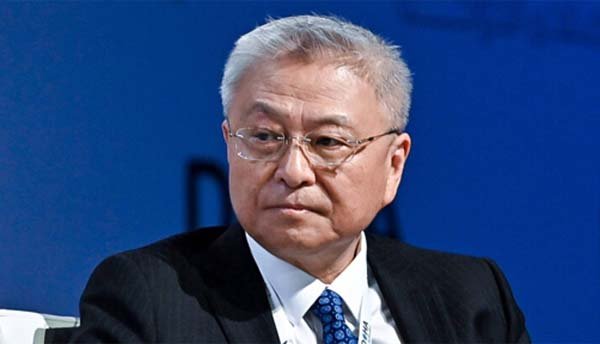
New Delhi, Mar 7 (UNI) The global economic and political order is undergoing significant disruption as protectionist policies, rising geopolitical conflicts, and the rapid advancement of Artificial Intelligence reshape international relations, warns Yan Xuetong, former Secretary-General of the World Peace Forum (WPF), in an exclusive interview with UNI.
Speaking on the impact of US tariff policies, Yan Xuetong argued that the traditional free-trade framework has already been severely weakened. Under the norms of the World Trade Organization (WTO), developed nations are generally expected to maintain tariffs below 10 percent.
However, tariffs imposed by the United States under President Donald Trump exceeded those levels and triggered retaliatory measures from several countries.
“Many countries have responded with reciprocal tariffs. For example, Canada has imposed counter-tariffs on the United States,” he said, adding that such moves indicate that the WTO system is increasingly “paralysed” and struggling to function effectively.
Beyond tariffs, economic sanctions and coercive economic measures are also contributing to the shifting global landscape. According to him, the former Director-General of the Institute of Modern International Relations at Tsinghua University, the balance of power that once constrained unilateral actions, particularly during the era of the Soviet Union, no longer exists.
“After World War II, the Soviet union had the military capability to counterbalance the United States. Today, no country possesses comparable power to restrain unilateral international actions,” he said.
The expert also highlighted the humanitarian crisis in the Gaza Strip, arguing that the inability of international institutions to prevent civilian casualties reflects a broader failure of global governance. Despite opposition from many member states within the United Nations, geopolitical divisions have limited collective action.
“If countries cannot even protect their citizens’ lives, it becomes difficult to talk about protecting economic resources or sovereignty,” he said.
Given the weakening influence of global institutions, the expert suggested that regional or issue-based alliances may become more practical solutions. Such frameworks could help countries cooperate on specific challenges when a broader global consensus is difficult to achieve.
The discussion also addressed the expanding role of artificial intelligence in global affairs. While AI has the potential to improve productivity and living standards, the expert expressed concern about its broader social and ethical consequences.
He warned that AI could accelerate the spread of misinformation and fake news, potentially creating widespread confusion and undermining public trust. Additionally, automation could significantly reduce employment opportunities, raising deeper questions about the meaning and purpose of work.
“The issue is not only economic benefit,” he said. “If people no longer need to work for survival, society must find new ways for individuals to live meaningful lives.”
He also noted that governments are beginning to introduce regulations to ensure that humans remain responsible for decisions made using AI technologies. Such measures are intended to prevent individuals or companies from evading accountability by blaming autonomous systems.
As geopolitical tensions, economic protectionism, and technological transformation converge, he emphasised that the world is entering a period of uncertainty. In this environment, safeguarding human rights, national sovereignty and responsible technological development may become central priorities for the international community.