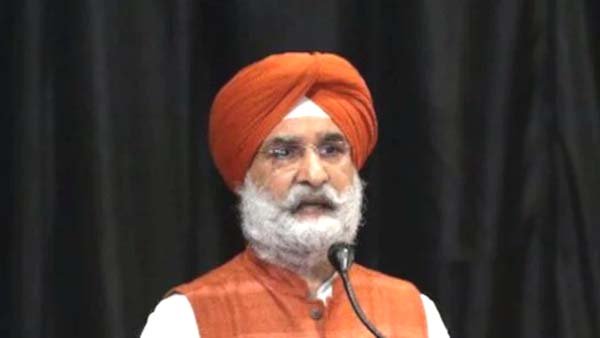







Jayanta Roy Chowdhury
New Delhi, March 6 (UNI) The United States on Friday announced a temporary 30-day waiver allowing Indian refiners to purchase Russian oil currently stranded at sea, a move aimed at stabilising global energy supplies amid rising geopolitical tensions in West Asia.
US Treasury Secretary Scott Bessent said the measure was designed as a short-term step to ensure the continued flow of oil into global markets without providing substantial financial gains to Moscow.
“President Donald Trump’s energy agenda has resulted in oil and gas production reaching the highest levels ever recorded,” Bessent said in a statement.
“To enable oil to keep flowing into the global market, the Treasury Department is issuing a temporary 30-day waiver to allow Indian refiners to purchase Russian oil. This deliberately short-term measure will not provide significant financial benefit to the Russian government as it only authorizes transactions involving oil already stranded at sea,” he added.
Bessent described India as an essential partner of the United States and said Washington expects New Delhi to increase purchases of American crude in the coming months.
“India is an essential partner of the United States, and we fully anticipate that New Delhi will ramp up purchases of US oil. This stop-gap measure will alleviate pressure caused by Iran’s attempt to take global energy hostage,” he said.
The decision comes as India reviews its energy security amid the growing risk of disruption in the Strait of Hormuz, one of the world’s most critical oil shipping routes.
Earlier this week, India’s Minister for Petroleum and Natural Gas Hardeep Singh Puri convened senior officials and executives from state-run energy firms to assess the availability of crude oil, liquefied natural gas (LNG), liquefied petroleum gas (LPG) and refined petroleum products.
According to officials, the meeting reviewed contingency plans and decided that India would seek waivers from the United States to continue importing Russian oil if necessary to meet fuel requirements in the event of disruptions in the Strait of Hormuz.
Indian officials are believed to have successfully taken up the matter with Assistant Secretary of State for South and Central Asian Affairs S. Paul Kapur who visited New Delhi just before the Holi festival.
Roughly half of India’s crude oil imports — estimated at about 2.5 to 2.7 million barrels per day — along with nearly 60 per cent of its LNG supplies transit the strategic waterway between the Gulf and the Arabian Sea.
The Strait has once again come into focus amid escalating tensions between the United States and Iran following reports of the killing of Iran’s Supreme Leader Ali Khamenei, raising concerns about possible tanker harassment, missile strikes or even temporary closure of the passage.
India imports the bulk of its energy from Gulf producers such as Iraq, Saudi Arabia, the United Arab Emirates, Qatar and Kuwait. Analysts say the country’s vulnerability lies less in a complete cut-off of supplies and more in cascading disruptions such as price spikes, shipping delays and rising freight costs that could affect the competitiveness of its exports.
Since 2022, Russian crude has emerged as a crucial buffer for Indian refiners whenever supplies from the Gulf have faced disruptions. Imports from the United States, Guyana and other non-Gulf producers have also expanded, giving Indian refiners greater flexibility to diversify their crude basket.