






BY RAMESH BHAN
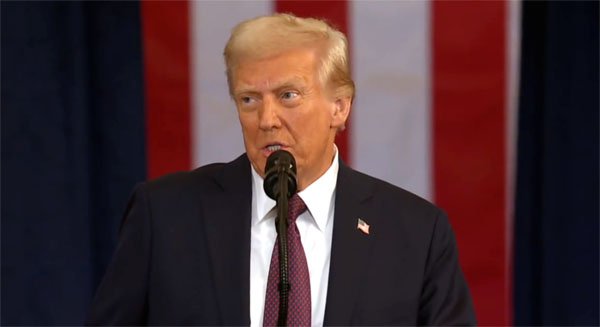
New Delhi, Mar 3 (UNI) Hinting at a long-drawn-out war with Iran, United States President Donald Trump took stock of the arms and ammunition stockpiles on Tuesday, saying the US has virtually unlimited supplies of medium and upper-grade weapons.
‘’The United States Munitions Stockpiles have, at the medium and upper medium grade, never been higher or better. We have a virtually unlimited supply of these weapons. The United States is stocked and ready to win big,’’ Trump said on his social media platform.
Trump had initially said the war could go on for four to five weeks, and his only goal was to deter Iran from pursuing its nuclear ambitions. However, in the wake of the Iranian counterattacks, Trump said it could go far longer.
“We projected four to five weeks, but we can go far longer than that. We’ll do it,’’ he added.
Wars can be fought forever, and very successfully, using just these supplies, which are better than other countries’ finest arms, he said.
“At the highest end, we have a good supply, but we are not where we want to be. Much additional high-grade weaponry is stored for us in outlying countries,’’ he added.
On March 2, 2026, Trump stated that while the mission is currently “substantially ahead” of schedule, the US has the “capability to go far longer” than the initial ‘four to five week’ window if necessary. However, in a formal war powers notification to Congress, Trump admitted it is not possible to know the full scope and duration of operations at this time.
The shift toward a potentially longer conflict aligns with an expanded list of military goals articulated by Trump.
Six U.S. service members have been confirmed killed in action. Iran has retaliated by closing the Strait of Hormuz.
However, Trump is increasingly coming under fire domestically for a ‘’prolonged war’’ with Iran. Congress is preparing for a high-stakes vote on War Powers Resolutions in both the House and Senate to constrain President Trump’s military actions in Iran. While the Trump administration claims the strikes were a proactive defence against an “imminent threat,” many lawmakers argue the operation lacks legal authorisation for a prolonged conflict.
Bipartisan resolutions led by Sen. Tim Kaine in the Senate and Reps. Ro Khanna and Thomas Massie in the House seek to mandate the termination of hostilities unless explicitly authorised by Congress. The Senate is poised to vote on Tuesday (today) or Wednesday (tomorrow), with the House expected to follow later in the week.
Even if the resolutions are passed, Trump is expected to veto them. Supporters would then need a two-thirds majority in both chambers to override the veto, which is currently considered unlikely.
US Secretary of State Marco Rubio and other officials briefed the “Gang of Eight,” arguing that intelligence showed Iran would have attacked US forces if Israel struck first. Critics, including Sen. Mark Warner, said this does not meet the legal standard for “imminent threat” and that the administration’s goals have shifted multiple times.
(The Gang of Eight is a colloquial term for a group of eight leaders within the US Congress who are briefed on classified intelligence matters by the executive. Specifically, the ‘Gang of Eight’ includes the leaders of each of the two parties from both the Senate and House of Representatives and the Chairs and Ranking Minority members of both the Senate Committee and the House Committee.)
While Speaker Mike Johnson and Sen. John Thune support Trump, some Republicans like Thomas Massie oppose the intervention as another “failed foreign war forever.’’
American Public opinion, too, is against the war. Early March polling indicated that only 21 per cent of Americans support the strikes, while 49 per cent view them as unnecessary and expensive. The debate has intensified following the confirmation of American service member deaths and reports of significant civilian casualties in Iran.
India, too, would face severe multi-dimensional risks of a long-drawn-out war. India is highly vulnerable as approximately 55 per cent of its crude oil imports and a significant portion of its LNG pass through the Strait of Hormuz. A prolonged closure or disruption would cause the oil import bill to surge considerably. Higher fuel and transport costs would drive up retail prices.
Increased spending on Defence and fertiliser subsidies would widen India’s fiscal deficit.
Remittances from Gulf countries could also be severely impacted. As of early 2025, over 8.5 to 9.7 million Indian nationals reside in the six Gulf Cooperation Council (GCC) countries, constituting one of the largest overseas communities in the region.
They are a critical source of foreign exchange, with the Gulf region contributing roughly 38-40 per cent of India’s total remittances. The remittances reached a record 135 billion USD to 136 billion USD in FY25. India relies on Qatari LNG as a feedstock for domestic fertiliser plants. A supply stoppage would threaten soil nutrients for nearly half of the country’s farmland. Key agricultural exports, including basmati rice and tea to Iran and Iraq, are already facing difficulties.
Logistical hurdles in Dubai could delay diamond shipments, affecting India’s diamond industry.