






Jayanta Roy Chowdhury
New Delhi, Mar 3 (UNI) Indian firms that use LNG are gearing up for cuts in supplies and higher prices for natural gas, which runs their turbines, arc furnaces, smelters, and other heavy machinery besides being feed for fertiliser and petro-chemical companies.
Qatar which accounts for more than 40 per cent of India’s LNG supplies has announced shutting down of its liquefied natural gas facilities after Iranian drone strikes on Monday at the West Asian nation’s Ras Laffan complex.
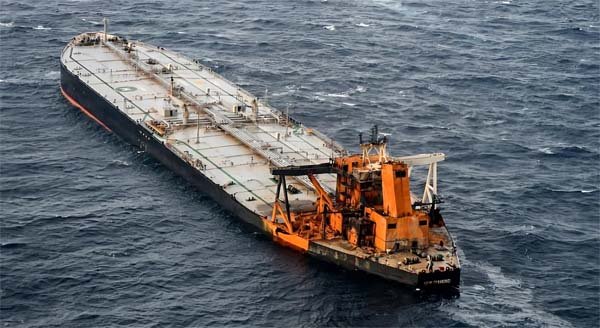
At the same time, the shipping price for very large oil tankers (called VLCCs) that can carry 2 million barrels of oil from West Asia to India, Japan, Korea and China reached a record high of USD 423,736, up by 94 per cent, according to the London Stock Exchange group.
The war in the Gulf is forcing India to face up to an old but as yet unresolved dilemma of how to buttress its energy lifelines from a war in oil-rich West Asia.
New Delhi’s response is part quiet contingency planning to insulate it from any coming oil price shock, while trying to reassure markets that the scale of its exposure will not impact India’s energy hungry economy.
Approximately, about 60 per cent of India’s LNG imports and half of its crude oil imports of about 2.5 to 2.7 million barrels per day, transit through the Strait of Hormuz, the narrow waterway between Oman and Iran.
Besides shipping costs and LNG shut downs, India has to contend with ever rising crude prices. The benchmark Brent crude price has already shot up to USD 85 a barrel at 5 pm IST on Tuesday as compared to USD 66 a month ago, and is forecast to touch USD 80 before end of day’s trading.
Commodity traders expect crude prices to continue climbing to “near USD 100” within Friday if the war continues unabated.
A prolonged disruption of crude, and gas supplies from the Gulf would reverberate through India’s economy, driving up prices, insurance costs, and logistical complexity almost overnight.
India’s exposure to turmoil in the Gulf is hardly new. Each time the region has convulsed, whether during the Iraq wars, flare-ups between Israel and Lebanon, or attacks by Houthi militants in Yemen, oil markets across Asia have registered the shock. For India, the tremors are rarely abstract. They travel quickly from distant battlefields to refinery gates, factory floors and household budgets.
The country imports most of its energy from Gulf producers including Iraq, Saudi Arabia, the United Arab Emirates, Qatar and Kuwait. The greater danger for New Delhi is not a complete severing of supplies, which remains unlikely, but the cascading disruptions that follow conflict: sudden price spikes, shipping delays, higher insurance premiums and freight costs that erode India’s competitiveness as an exporting power.
To cushion those blows, India has spent the past few years quietly redrawing its energy map. For the last four years, discounted Russian crude has served as a crucial buffer whenever Gulf flows have wavered because of war or other disruptions.
Sources said “India is now exploring ways to increase purchases from Russia”, even as they weigh diplomatic conversations with Washington over possible sanctions flexibility for spot cargoes.
At the same time, refiners have widened their net, stepping up imports from the United States, Venezuela, Africa and other non-Gulf producers.
This diversification has given Indian companies greater latitude to reshuffle their crude slate in moments of stress. With refining capacity of about 258 million metric tonnes a year, with plans to expand refinery output by a sixth, India can process a broad array of crude grades, from light crude to the heaviest kind, a technical advantage that helps cut dependence on any one supplier.