




BY RAMESH BHAN
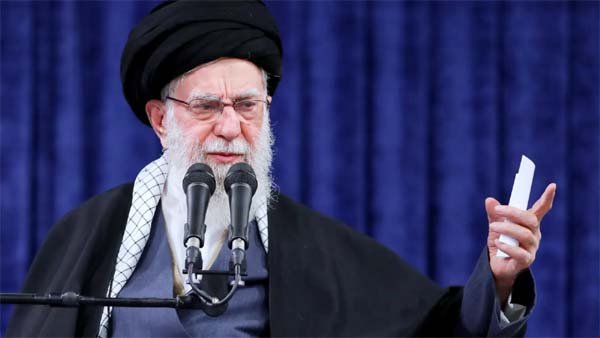
New Delhi, Mar 1 (UNI) Iranian Supreme Leader Ayatollah Ali Khamenei’s death in a coordinated US-Israeli military strike has plunged the entire Persian Gulf into a major crisis, threatening a flare-up and destabilisation of the entire region.
The killing of the 86-year-old Supreme Leader of Shias during the Holy Muslim month of Ramadan has triggered a major regional crisis with devastating implications for Iran’s internal stability as well as the broader Muslim world. The killing can have religious implications besides political and economic.
Khamenei held ultimate authority over Iran’s military, judiciary, and foreign policy for over 35 years. His death creates a massive power vacuum, as no official successor has been named. A temporary Governing Council—consisting of the President, the Head of the judiciary, and a member of the Guardian Council—has assumed control until a new leader comes in.
The Islamic Revolutionary Guard Corps (IRGC) has vowed “the most devastating offensive operation” in the history of the Republic. Iran has already launched retaliatory missile strikes against U.S. bases and regional targets in Qatar, Kuwait, and Bahrain.
The crisis threatens to bring turmoil and volatility in global energy markets. Any disruption to the Strait of Hormuz, from where a third of sea-transported oil exports pass, could spike fuel prices worldwide. Iran had already threatened to block the Strait of Hormuz if it was attacked.
The timing of the killing–during Ramadan– adds a significant religious dimension to Iran’s and global reaction. The killing of the Ayatollah during this holy month invokes the “Spirit of Badr” (referencing a historical Islamic victory), which could awaken a sense of solidarity and resilience across the Muslim world rather than acting as a deterrent.
The killing coincides with the martyrdom of Imam Ali, the first Imam of Shias and son-in-law of Prophet Mohammed, who was leading the prayers during Ramadan when he was martyred.
Globally, there are about 200-260 million Shias, constituting 10-15 per cent of the world’s Muslim population. In India, Shias are 30-50 million, constituting about 15-20 per cent of the total Muslim Population, mainly in Lucknow, Hyderabad, Mumbai and Kashmir.
Mourning and protest demonstrations were held by Shias in Karbala, Iraq and Jammu and Kashmir. Large-scale mourning and protests have broken out among the Shia community in Jammu & Kashmir (Srinagar, Budgam districts). However, in some parts of the world. anti-regime Iranians also celebrated as ‘’liberation from decades of clerical rule.’’
Even as the killing of Ali Khamenei triggered widespread condemnation, the Muslim world remains divided. While some see him as a martyr who was killed during Ramadan, others view his death as an opportunity for the Iranian people to reclaim their country.
Iran has declared a 40-day mourning period and seven public holidays as the international community risks a regional flareup.
The Iranian leadership, which had faced massive public protests a few months back, might see a wave of public sympathy for the Iranian leader.
Iran’s Revolutionary Guards warned that the “heaviest offensive operations in the history” of the Islamic Republic’s armed forces would begin imminently. Iran’s government described the killing as “a great crime” that would “never remain unanswered and will turn a new page in the history of the Islamic world.”
The Supreme National Security Council (SNSC), Iran’s top security body, said the killing of the Ayatollah would “begin a massive uprising in fighting the world’s oppressors.” It vowed that Iran and its allies would emerge “more resilient and determined.”
Global impact notwithstanding, the killing of the Ayatollah has significant implications for India in economic, strategic and domestic matters. The attacks on Iran, days after Prime Minister Narendra Modi visited Israel, could have some impact domestically.
From an economic and energy point of view, any disruption in the Strait of Hormuz is expected to spike crude prices, increasing India’s import bill, weakening the rupee, and leading to higher petrol and diesel prices. Bilateral trade, valued at approximately 1.68 billion USD (FY 2024–25), is at risk. Exporters of rice, tea, and pharmaceuticals fear rising logistics and insurance costs as shipping routes may need to be diverted via the Cape of Good Hope, adding 15–20 days to transit times.
The future of the Chabahar Port and the International North-South Transport Corridor (INSTC) is now uncertain. These projects are vital for India’s strategic access to Central Asia and Afghanistan, bypassing Pakistan.
India has officially called for “maximum restraint” and a return to dialogue. External Affairs Minister S. Jaishankar has already held talks with Gulf counterparts to discuss de-escalation.