





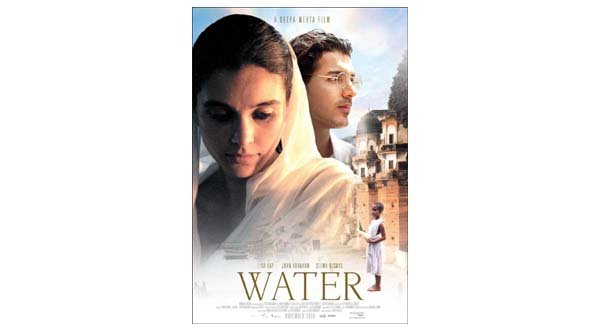
New Delhi, Feb 28 (UNI) Two decades after its release, Deepa Mehta’s ‘Water’ continues to resonate as a landmark in global cinema, completing her acclaimed elemental trilogy and leaving an enduring mark on audiences worldwide. In a conversation with Variety India, Mehta reflects on the film’s turbulent journey, casting choices, and its continued relevance 20 years later.
Set in 1930s India, Water follows a young widow sent to an ashram, confronting the rigid social restrictions imposed on widowed women. The film is a searing critique of patriarchy, tradition, and social exile.
When asked about her casting choices, John Abraham and Lisa Ray, Mehta revealed a surprising influence, “John was my mother’s choice. She saw him and said he was a handsome guy, and I must cast him. That was it. I could never say no to my mother,” as quoted by Variety India.
She also shared her original casting vision, which included Akshay Kumar for John’s role, Nandita Das in place of Lisa, and Shabana Azmi for Seema Biswas’ role.
Asked if she would make Water differently today, Mehta was emphatic, “’Water’ went through many upheavals in the casting and the shooting schedules. It was finally made exactly the way I wanted to. But with a different cast. If I had to do it again, I wouldn’t change a thing.”
Reflecting on her independence as a filmmaker tackling socially sensitive subjects, she said, “I am making the films I want to, the way I want to.”
On being called the most internationally recognized Indian filmmaker since Satyajit Ray, she responded with humility, “I am flattered, but it’s not true. I am nowhere near Ray. And besides me, there are so many.”
Among contemporary directors she admires is Neeraj Ghaywan, “I saw his ‘Homebound’ at the Toronto Film Festival last year. I was blown away. He is an exceptional director.” She also praised Manipuri filmmaker Lakshmipriya Devi and her film Boong for making waves globally.
Currently, Mehta is working on a new project, Forgiveness, based on the Japanese internment camps in Canada during the Second World War, “I am working on a film called ‘Forgiveness,’ based on a true story about the Japanese internment camps in Canada, where Canadian-Japanese citizens were placed during the Second World War. What we do to our own citizens when their ‘look’, ‘garb’, or ‘religion’ differs from the populist ruling government is despicable and heartbreaking.”
On the recurring theme of discrimination in her films, she reflected, “Come to think of it, you are right. Whether it is communal discrimination in ‘1947 Earth’, the segregation of widows in ‘Water’, or the isolation of a homosexual in ‘Funny Boy’…I think it is appalling that so much divisive cinema is being made in India.”
Her reflections underscore why Water remains a culturally and socially significant film, even 20 years on, continuing to inspire conversations on justice, equality, and human dignity.