

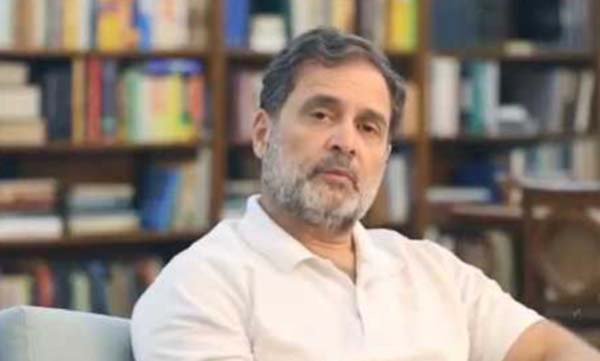
New Delhi, Feb 26 (UNI) Leader of Opposition in Lok Sabha Rahul Gandhi on Thursday launched a sharp attack on the Centre, alleging that peaceful protests in India have been “turned into the greatest crime” under the leadership of Prime Minister Narendra Modi.
In a detailed statement, Gandhi claimed that the country was being pushed in a direction where dissent is equated with sedition and questions are portrayed as conspiracies. “Today, under the rule of a ‘compromised’ Prime Minister in India, peaceful protest has been turned into the greatest ‘crime,’” he said. “The world’s largest democracy is gradually being pushed in a direction where dissent is branded as sedition and asking questions is described as a conspiracy.”
The Congress leader referred to a series of recent protests to underline his charge. He said students distressed by repeated examination paper leaks were met with force when they raised concerns about their future. “Young people raised their voices for their future- the response they received was police batons,” Gandhi alleged.
He also referenced the protest by prominent women wrestlers who had sought an impartial investigation into serious allegations against a senior BJP leader. “Their appeal was discredited, their movement was crushed, and they were forcibly removed from the streets,” he said.
Gandhi further cited a peaceful protest at India Gate in support of a rape survivor, claiming that the demand for justice was treated as an “inconvenience” and cleared away.
On economic issues, he said members of the Indian Youth Congress were arrested after opposing a US trade deal they believed was harmful to the country. He also mentioned environmental protests against air pollution and farmers’ agitations over agricultural laws and rights, alleging that demonstrators were labeled “anti-national” and met with tear gas, water cannons, rubber bullets, and lathis.
“When tribal communities stood up for their rights over water, forests, and land, they too were viewed with suspicion — as though demanding their rights was a crime,” Gandhi said.
Questioning the state of democratic functioning, Gandhi asked, “What kind of democracy is this, where a ‘compromised’ Prime Minister is afraid of questions? Where crushing dissent is increasingly becoming the nature of governance?”
“Peaceful protest is not a crime — it is the soul of democracy. Asking questions is not democracy’s weakness — it is its strength,” he said, adding that democracy grows stronger when governments listen to criticism and remain accountable.
In a pointed remark directed at the Prime Minister, Gandhi said, “This is not North Korea — this is India. When those in power begin to see themselves as the nation, and dissent as the enemy, democracy dies.”
The remarks come amid ongoing friction between the ruling Bharatiya Janata Party and opposition parties over issues ranging from law enforcement actions against protesters to the broader state of civil liberties in the country. The government has consistently maintained that it respects democratic rights but will act firmly against unlawful activities and threats to public order.