




By Parmod Kumar
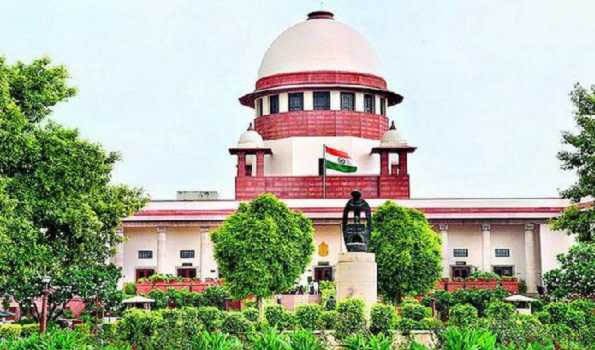
New Delhi, Feb 20 (UNI) Flagging a “trust deficit” and lack of cooperation between the West Bengal government and the Election Commission of India (ECI), the Supreme Court on Friday termed the situation surrounding the Special Intensive Revision (SIR) of electoral rolls in the State as “extraordinary”, and directed deployment of serving as well as former judicial officers to oversee adjudication of claims and objections relating to voters in “logical discrepancies” category.
A Bench of Chief Justice Surya Kant, Justices Joymalya Bagchi and Vipul M. Pancholi said the process had got paused at the stage of examining objections relating to voters placed in the “logical discrepancy” list.
“There is an unfortunate blame game of allegations and counter-allegations, which shows a trust deficit between two constitutional functionaries – that is, the Democratically elected West Bengal government and the Election Commission of India. Now the process is stuck at the stage of claims and objections of the persons who have been included in the logical discrepancy list. Most of the persons to whom notices were issued have submitted their documents in support of their claim for inclusion in the voter list. These claims are required to be adjudicated in a quasi-judicial process by Electoral Registration Officers (EROs,” the Court said.
The court further said that the Collector and Superintendent of Police are under an obligation to provide assistance and logistical support to the presiding judicial officers and team for the smooth completion of the remaining process of SIR.
It further directed that both Collector and the Superintendent of Police will be under deemed deputation for the compliance of directions that may be issued in the course of the hearing of claims and objections. The bench also ensured that the representatives both of the State government and the ECI were there to obviate any contention in the completion of the remaining process.
Noting disputes over the rank and competence of officers deployed by the State, the Court requested the Chief Justice of the Calcutta High Court to spare serving judicial officers and former District or Additional District Judges to assist district-wise adjudication. It acknowledged this may disrupt regular court work and asked the High Court to make suitable administrative arrangements for the hearing of cases requiring urgency.
The court ordered involving the judicial officers in deciding the claims and objections, after a suggestion to this effect from the bench was welcomed both by the senior advocates representing the West Bengal government and the Election Commission of India.
Earlier, on February 9, the Court had directed the State to ensure that officers provided to the ECI report for duty. The ECI, however, alleged non-cooperation and lack of qualified personnel. CJI Kant remarked, “You are not providing competent Group A officers. How can incompetent officials decide the fate of the people?” Justice Bagchi added that there appeared to be “a sense of hesitancy on both ends” and judicial officers could help take the process to a logical conclusion.
The Court also cautioned the State administration. “Please cooperate with the High Court. Please create an environment for them to function. Imagine what will happen if the SIR process is not completed. Then what happens?” it asked.
Senior Advocate Shyam Divan, appearing for Chief Minister Mamata Banerjee, alleged that “a new species of observers” – Special Roll Observers – deployed by the ECI were overriding decisions of statutory EROs and that “7 lakh people have been marked by this new species of officers.” The ECI denied that such officers trumped EROs.
Taking note of allegations of intimidation and violence in the course of the conduct of SIR, the Court warned the West Bengal Director General of Police that “stern action” would follow if complaints were not addressed.
The Bench indicated that if the process is completed, a list may be published after February 28, clarifying that it would not be final, and a supplementary list could follow. The matter will be heard again in March.
At the conclusion of the hearing, senior advocate Kapil Sibal, representing the West Bengal government, said, “This is what happens when authorities don’t cooperate. Very sad. Your Lordship don’t know who to blame or not.”